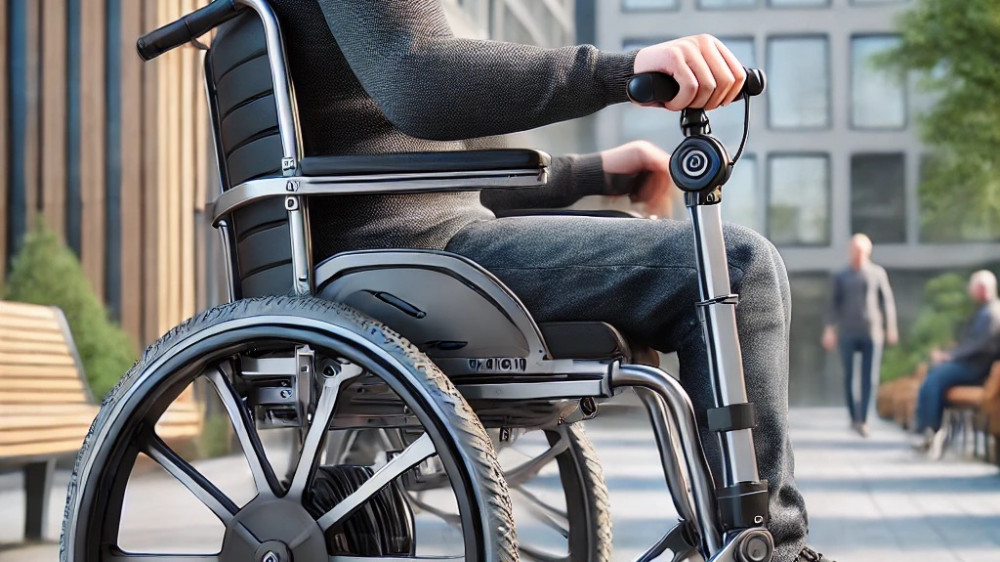
German Court Victory: Health Insurer Ordered to Pay for High-Speed Wheelchair Power Assist
A recent landmark ruling by Germany's Federal Social Court (Bundessozialgericht) has significantly strengthened the rights of insured individuals requiring medical aids. The court decisively ruled that public health insurers (gesetzliche Krankenkassen) must cover the cost of a motorized power-assist device for a manual wheelchair, even if the device enables higher speeds. This decision prioritizes patient mobility, pain prevention, and quality of life over insurer cost concerns. For those navigating complex health insurance claims, especially for durable medical equipment, this case sets a powerful precedent. In a US context, think of this as a ruling that could influence coverage disputes for advanced mobility devices under Medicare or private health insurance plans.
The Case: A Fight for Mobility and Pain Relief
The case centered on a man whose life was changed by a tragic 1989 traffic accident, resulting in paraplegia and a lifelong dependence on a wheelchair. Decades later, he developed severe and painful osteoarthritis in his thumb joint, making the simple act of gripping and pushing his wheelchair's rims agonizing. To maintain his independence and mobility, he applied to his health insurer, AOK Niedersachsen, for coverage of a specific device: a fast, electrically powered hand-crank drive unit that attaches to a manual wheelchair.
This power-assist device can reach speeds up to 25 km/h (about 15.5 mph) and is designed to significantly reduce the physical strain on the user, requiring minimal residual strength. The insurer denied the claim, triggering a legal battle that climbed through three levels of Germany's social courts over several years.
The Legal Journey: From Denial to Landmark Victory
The insurer's initial denial was based on an assessment by the Medical Review Board (Medizinischer Dienst), which argued that a standard, lower-powered assistive device was sufficient for the claimant's "local area" mobility needs. The patient disagreed and filed a lawsuit.
- Social Court Hildesheim (First Instance): Sided with the insurer (Case: S 56 KR 152/18).
- State Social Court of Lower Saxony-Bremen (Appeal): A new court-appointed expert witness changed the trajectory. The expert concluded that the requested power-assist device would not only improve mobility but also prevent the worsening of the claimant's osteoarthritis. The court overturned the lower court's decision and ordered the AOK to provide the device (Case: L 4 KR 526/20).
- Federal Social Court (Final Appeal): The AOK appealed to the highest court. In its ruling (Case: B 3 KR 13/22 R), the Federal Social Court delivered a decisive victory for the patient, establishing crucial legal principles.
The Court's Groundbreaking Reasoning
The Federal Social Court rejected the insurer's argument that a device enabling 25 km/h was excessive. Instead, it focused on the core purpose of health insurance coverage for medical aids (Hilfsmittel). The court emphasized several key points:
- Mobility as a Fundamental Need: The ability to move within one's local environment using one's own physical capacity is a protected basic need that health insurance must help secure.
- Prevention of Harm (Pain & Disease Progression): Coverage is justified not only to enable mobility but also to prevent the aggravation of an existing condition—in this case, debilitating osteoarthritis caused by the strain of propelling a manual wheelchair.
- "Necessity" Defined by Patient Need, Not Just Cost: The court clarified that the "necessity" of a medical aid is determined by the individual's specific medical and functional requirements to participate in daily life, not merely by the existence of a cheaper, less effective alternative.
- Technical Sophistication is Not a Barrier: The fact that a device is technologically advanced or enables higher speeds does not automatically disqualify it from coverage if it is medically and functionally necessary for the patient.
What This Ruling Means for You: Implications for Insured Individuals
This precedent-setting decision has wide-ranging implications for anyone in Germany's public health system who relies on or may need medical aids.
| Principle Established | Practical Impact for Insured Persons |
|---|---|
| Mobility & Pain Prevention are Paramount | Insurers must cover aids that enable independent mobility and prevent the worsening of a related medical condition (e.g., joint pain). |
| Individual Need Trumps Generic Alternatives | If a standard aid is insufficient for your specific health situation, you have a stronger case to demand a more advanced, suitable device. |
| High-Tech & "Faster" Devices Can Be Necessary | Do not be deterred from applying for advanced technology. Be prepared to justify how its features (like speed or reduced effort) address your specific medical and functional limitations. |
| Persistence in Appeals Pays Off | The case demonstrates the importance of appealing insurer denials, potentially through all three levels of social court. |
Actionable Steps If Your Medical Aid Claim Is Denied
- Get a Detailed Medical Report (Heil- und Hilfsmittelbericht): Have your treating physician write a comprehensive report that explicitly links the requested aid to your specific medical condition, functional limitations, and the goal of preventing further health deterioration.
- Formally Appeal (Widerspruch): Always file a written objection against the insurer's denial within the one-month deadline.
- Seek a Second Opinion from the MDK: You can request a new assessment from the Medical Review Board.
- Consider Legal Action: As this case shows, the social court system exists to adjudicate these disputes. Consulting with a lawyer specializing in social law (Sozialrecht) is often advisable for complex or high-value claims.
- Cite This Precedent: Reference this Federal Social Court ruling (B 3 KR 13/22 R) in your communications with the insurer and in any legal filings. It is now binding case law.
Conclusion: The Federal Social Court's ruling is a major win for patient rights within the German statutory health insurance (GKV) system. It firmly establishes that coverage for medical aids must be guided by the principles of enabling meaningful mobility, preventing pain, and catering to individual need—not by cost-cutting alone. If you or a loved one is fighting for a necessary mobility device or other medical aid, this judgment provides a powerful legal foundation. Remember, securing your right to necessary care often requires knowledge, persistence, and a willingness to challenge initial denials.