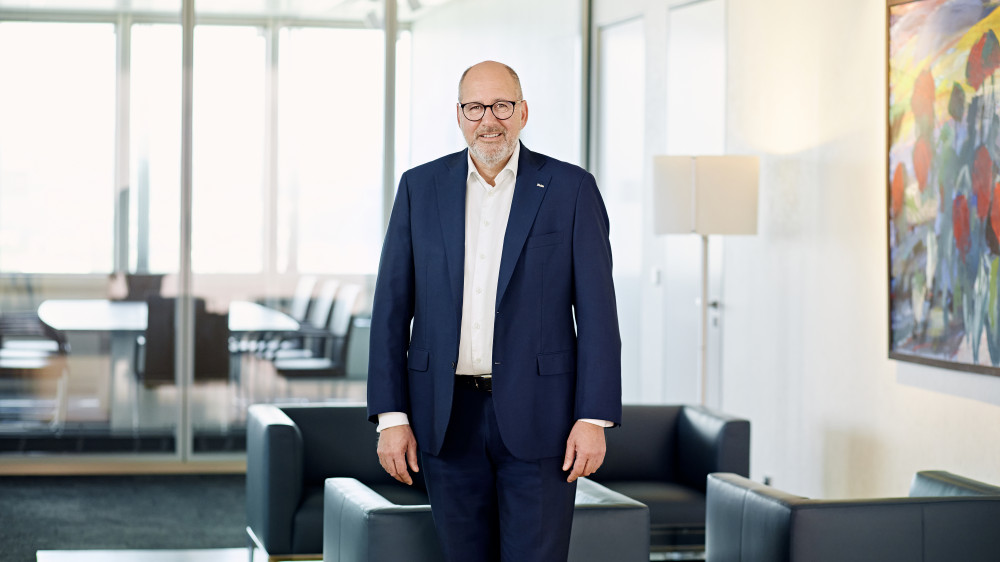
Debeka CEO: Why Private Health Insurance (PKV) Can Face Demographic Change with Calm
Are you worried about how an aging population will affect your health insurance costs and coverage? In an exclusive interview, Thomas Brahm, CEO of Debeka Krankenversicherungsverein a.G. and Chairman of the Association of Private Health Insurance (PKV-Verband), explains the structural advantages that allow German private health insurance (PKV) to navigate demographic shifts with confidence. For US readers, this offers a fascinating contrast to the challenges facing Medicare and the Affordable Care Act (ACA) marketplace as America's population ages.
The Core Advantage: Capital Funding vs. Pay-As-You-Go
When asked about the primary challenge of demographic change, Brahm immediately highlights the fundamental difference between systems:
"Demographic change poses enormous challenges particularly for the Statutory Health Insurance (GKV). In the GKV's pay-as-you-go system, the working population ultimately has to bear the expenses of retirees... Private Health Insurance, however, operates with a capital funding system, which makes it largely independent of demographic developments."
This is a crucial distinction. While public systems like Germany's GKV or the US Medicare rely on current workers' contributions to fund current retirees' care, PKV uses a fully funded model. From day one, a portion of a policyholder's premium is set aside in ageing provisions (Alterungsrückstellungen). These funds are invested and grow over time, specifically earmarked to cover the higher healthcare costs of that individual's later years.
Result: PKV contributions are calculated for a lifetime. They are designed to remain stable regardless of shifts in the ratio of young to old in society. "Subsequent generations are not burdened with having to co-finance the high costs of the elderly," Brahm states.
No Impact on Risk Calculation, But a Focus on Prevention
Brahm clarifies that demographic change itself has no direct impact on PKV risk calculation or tariff design, as costs are pre-funded per individual. The real drivers of future premium adjustments are medical inflation and new treatments.
However, prevention becomes a key tool for cost containment. With age, the risk of chronic diseases like diabetes, cardiovascular conditions, and dementia increases. Debeka's strategy focuses on proactive management:
- Targeted Coaching Programs: 12-month coaching for chronic conditions (e.g., Diabetes Type 2, COPD, mental health issues) to help policyholders manage their health and avoid complications.
- Prevention Campaigns: Information drives, such as recent campaigns on vaccinations, including the shingles vaccine for those over 60.
- Digital Health Integration: "We try to sensitize insured persons... to adopt a more health-conscious lifestyle," Brahm explains, using digital tools to support this process.
Leveraging Technology to Control Costs and Improve Care
Facing a future with more demand and a potential shortage of medical professionals, Debeka is investing heavily in digital health solutions (DiGA):
- Reimbursement for Certified Apps: Debeka reimburses costs for digital health applications listed in the official BfArM directory.
- Proprietary Platform: The company is building its own directory of digital solutions via selective contracts. Examples include immediate psych-oncological support for breast cancer patients and a specialized app for prostate cancer.
- Home-Based Monitoring: For years, Debeka has offered policyholders with heart conditions a mobile EKG device. This allows home monitoring, often preventing unnecessary emergency room visits by providing quick analysis and reassurance.
Strategic Partnerships for Quality and Efficiency
To enhance care and manage costs, Debeka has developed key external partnerships:
- widecare GmbH: A Debeka subsidiary that specializes in integrating digital and traditional medical approaches. It runs programs like psych-oncological support for cancer patients, aiming to close care gaps and reduce hospital admissions.
- Supplier Networks: Partnerships with providers of medical aids (hearing aids, incontinence products, respiratory devices) and a nationwide medical supply house. These offer policyholders better prices and streamlined, full-service logistics from ordering to delivery and returns.
A Policy Proposal: Expanding the Capital-Funding Model
Brahm sees the PKV model as a blueprint for broader system sustainability. His key policy suggestion is to expand capital-funded coverage to more people. He points to private long-term care insurance as a critical supplement to the underfunded social care system, suggesting that lawmakers could strengthen overall system resilience by incentivizing such capital-backed provisions, including through employer-sponsored schemes.
The Future: Proven Resilience and Growing Reserves
Brahm is optimistic about PKV's future in an aging society, citing its proven track record:
"The principle of capital funding has worked well even during the low-interest phase... Since 2008, the ageing provisions of the PKV have more than doubled."
By the end of 2023, these provisions across the entire PKV industry exceeded 328 billion euros. These reserves, invested in long-term assets like bonds, real estate, and infrastructure, ensure that insured individuals are not dependent on younger generations in their old age.
Key Takeaway for Policyholders: The PKV's capital-funded structure provides a built-in buffer against demographic pressures that strain pay-as-you-go systems. For individuals choosing their health coverage, this represents a significant long-term stability advantage. As Brahm concludes, this model not only secures individual coverage but also "relieves the entire healthcare system" of demographic burdens.
For anyone evaluating private health insurance options in Germany or interested in sustainable healthcare financing models, the PKV's approach offers a compelling case study in forward-looking, individual responsibility-based planning.