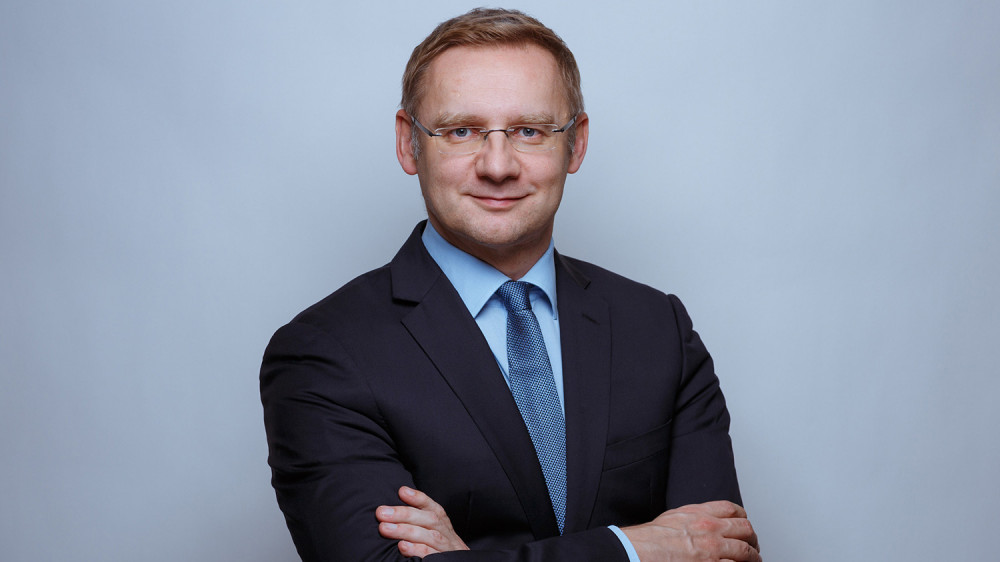
Fund of Funds Expert Interview: Why 'Dachfonds' Are Excellent for Small Investors
In a financial landscape reshaped by rising interest rates and inflation, investors are re-evaluating their strategies. Eckhard Sauren, a pioneer in the German fund industry and founder of Sauren Fonds-Service AG, offers a compelling case for a sophisticated yet accessible tool: the Fund of Funds (Dachfond). In an exclusive interview, Sauren argues that these multi-manager vehicles are not just for institutions but are "excellent for small investors," providing them with professional-grade diversification and manager selection typically reserved for large capital pools.
Navigating the New Rate Environment: From "Interest Rate Trap" to Opportunity
Sauren, who co-authored the book "The Interest Rate Trap," warned of the risks in the low-yield era. With central banks now aggressively hiking rates, his analysis has been validated, as bond indices suffered double-digit losses in 2022. However, he sees a shift: "There are now attractive risk/return ratios that can be captured through targeted investments in carefully selected bond fund managers." The key for investors is not to abandon fixed income but to approach it with selectivity and professional guidance.
The Core Advice: Beyond Simple Diversification
Sauren's fundamental recommendation is broad diversification, but he cautions that a simple mix of stocks and bonds is insufficient, as 2022 proved when both asset classes fell simultaneously. His solution: "The integration of carefully selected absolute return fund managers is an essential component that should fundamentally be implemented in portfolios—especially in the current phase." These strategies aim for positive returns in all market conditions, providing a crucial diversifier when traditional correlations break down.
The Active vs. Passive Debate: Performance Over Cost Obsession
Addressing common criticism from consumer advocates about the double fee layer in Dachfonds (the fund's fee plus underlying managers' fees), Sauren argues the debate is too focused on cost. "Outstanding fund managers are able to more than recoup their costs through good performance. Therefore, investors should not only look at the costs but above all at the performance capability of active fund managers." His firm's philosophy—"We don't invest in funds, we invest in fund managers"—highlights a conviction that skilled active management can justify its price by adding net value after fees.
| Aspect | Advantage for Small Investors | Consideration / Potential Drawback |
|---|---|---|
| Access & Diversification | Grants access to the same professional manager selection and multi-asset diversification as large institutional investors. | Requires trust in the Dachfond manager's selection skill; investor is one step removed from underlying assets. |
| Active Management | Provides cost-efficient access to active tactical asset allocation and manager rotation. | Involves higher total fees (layered structure) than a passive ETF portfolio. |
| Risk Management | Professional oversight can dynamically adjust to market phases (e.g., integrating absolute return strategies). | Performance depends entirely on the Dachfond manager's skill; poor selection leads to underperformance. |
| Simplicity | One investment delivers a complex, professionally built multi-manager portfolio. | Less transparency and control for the investor compared to building their own fund portfolio. |
Why Dachfonds Suit Small Investors Specifically
Sauren makes a powerful egalitarian argument: a Dachfond democratizes sophisticated investing. A small investor with a few thousand euros can own a slice of a portfolio that invests in a curated selection of top-tier, often institutional-share-class funds. The small investor benefits from:
- Economies of Scale: The Dachfond's large pool of capital can access funds with lower minimum investments or better fee terms than an individual could.
- Professional Due Diligence: Continuous monitoring and selection of underlying managers, a resource-intensive process, is handled by experts.
- Structural Discipline: It enforces a diversified, professionally managed approach, countering the emotional and behavioral pitfalls that often harm individual investors.
Broader Outlook: The German Pension Debate
On the topic of the German government's proposed "Aktienrente" (stock pension), Sauren finds the basic idea understandable but awaits details on implementation. More broadly, he supports tax incentives for investment fund savings accounts (Investmentdepots) within the third pillar of retirement planning, an idea also championed by the German Investment Funds Association (BVI).
Conclusion: Eckhard Sauren's insights challenge the prevailing narrative that low-cost passive investing is the only suitable path for small investors. In a complex market environment, he presents a reasoned case for the Fund of Funds (Dachfond) as a vehicle that can provide essential active management, sophisticated diversification, and access to elite fund managers—all within a single, accessible product. For small investors willing to pay for potential skill-based outperformance and seeking a hands-off, professionally curated portfolio, a well-constructed Dachfond represents a compelling alternative to the DIY ETF approach. As with any investment, due diligence on the Dachfond manager's track record, philosophy, and fee structure remains paramount.