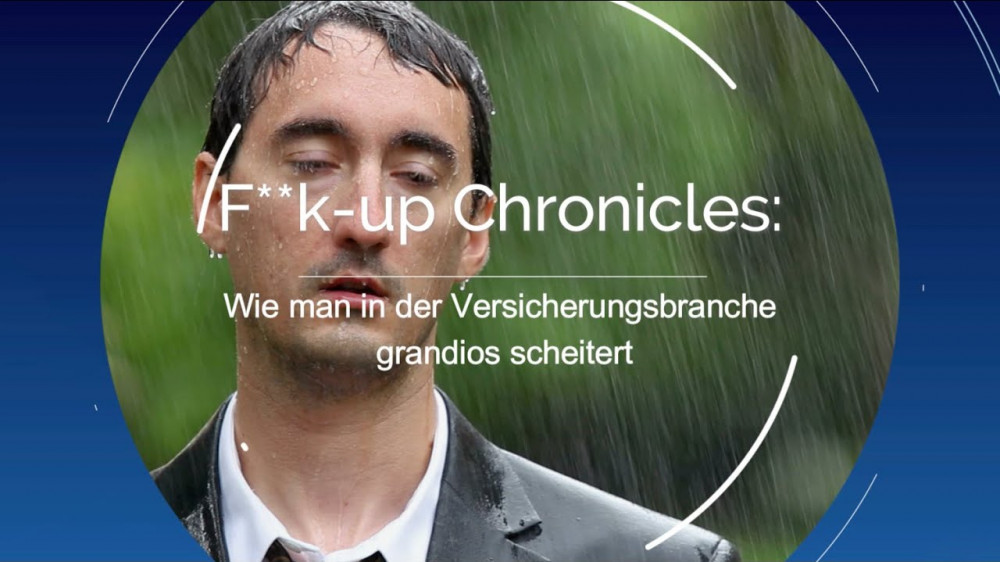
Learning from Failure: An Insurance Broker's Hard-Earned Lessons on Growth, Risk, and Focus
In the high-stakes world of insurance brokerage and financial services, success is often glorified, while failure is whispered about in closed circles. But what if the most valuable lessons come from the mistakes we'd rather forget? In a remarkably candid interview, seasoned insurance entrepreneur Tino Scraback pulls back the curtain on his costliest errors—from botched portfolio acquisitions and failed diversification to relinquishing control and risky investments. His story is a masterclass in resilience, offering actionable insights for any financial advisor, insurance agent, or business owner navigating growth and uncertainty. Here, we distill his hard-earned wisdom into key principles for sustainable success.
The Perilous Pitfalls of Portfolio Acquisition
Scraback's experience with buying and selling insurance client portfolios ("Bestandskauf") highlights a critical, often overlooked risk: contractual ambiguity. In one instance, he was sued as a managing director after selling a firm because it lacked proper client advisory documentation. The court ruled against him, forcing a purchase price reduction. Learning from this, his company later sued a seller for the same issue—only to receive a completely opposite ruling from a different court, which stated that documentation should reside with the client, not the broker.
Key Takeaway for Brokers & Agents: The legal landscape is inconsistent. When engaging in portfolio transactions, you must operate with extreme diligence.
- Due Diligence is Non-Negotiable: Verify the existence and quality of all mandatory documentation—client contracts, data privacy consents, and advisory records—before any deal is finalized.
- Contract Specificity is Your Shield: Purchase agreements must explicitly state what is being sold, including the state of documentation. Vague terms are an invitation for future litigation.
- Assume Nothing: Just because a practice is common doesn't mean it's legally defensible. Protect yourself with ironclad contracts.
The "Shiny Object" Trap: Why Diversification Can Derail Your Core Business
Flush with capital from a successful exit, Scraback embarked on an ambitious diversification spree. He ventured far beyond his insurance brokerage expertise into restaurants, a hotel, a bar, and even a bordello. He invested in numerous startups and pursued a two-brand strategy for his core business. The result? "Nothing worked," he admits. These ventures, while exciting, drained resources, focus, and capital.
Key Takeaway for Financial Professionals: Passion projects are not business strategies.
| Diversification Mistake | Consequence | The Corrective Principle |
|---|---|---|
| Investing in unrelated hospitality/entertainment businesses. | Capital loss, management distraction, no synergy with core insurance expertise. | "Cobbler, stick to your last." Double down on what you know and where you have a competitive edge. |
| Pursuing a two-brand strategy (online vs. commercial brokerage) without the right leadership. | Operational disaster, cultural clash, strategic confusion, eventual fire-sale of acquired firms. | Master one business model before attempting another. Leadership bandwidth is a finite resource. |
| Angel investing in multiple startups without domain expertise. | Near-total loss of invested capital. High risk without the skill to properly evaluate opportunities. | If investing outside your field, use extreme caution or rely on proven professionals (e.g., fee-based investment advisors). |
Scraback's revised mantra: "Do one thing right—the thing you can do." For insurance brokers, this means excelling in your niche—be it commercial insurance, disability insurance, or financial planning—before chasing tangential opportunities.
The High Cost of Delegating Core Leadership
Perhaps Scraback's most expensive lesson was hiring an external managing director to run his new commercial brokerage division while he and his partner stepped back. "It was an absolute failure... my most expensive mistake," he states. The external leadership misread the market, bloated overhead during a downturn, and lost the trust of employees. By the time the founders retook control, significant damage was done.
Key Takeaway for Agency Owners:
- Retain Control During the Growth Phase: For young, scaling companies, founder-led vision and hands-on management are often irreplaceable. Delegating ultimate strategic responsibility too early can be catastrophic.
- Build a Team That Complements You: Hire for roles that cover your weaknesses (e.g., operations, marketing) but keep the strategic reins for the core business firmly in the hands of those who built it.
- Culture is King: An external hire may not understand or preserve the company culture that drives success. Integration and alignment are paramount.
Investment Lessons: Greed, Leverage, and the Allure of High Returns
Scraback's forays into stock trading and real estate investing reinforced universal truths. During the COVID-19 boom, he made—and then lost—significant sums through leveraged stock trades. In real estate, his worst losses came from properties in Chemnitz and Gera promising 13-20% returns. "The higher the return, the higher the risk. This principle held true and probably always will," he concludes.
Key Takeaway for Advisors & Investors:
- Beware of Promised High Returns: In both securities and real estate, yields significantly above market average should be a red flag, not a magnet.
- Avoid Leverage You Don't Understand: Using debt or complex instruments to amplify gains also amplifies losses. Prudent, long-term investing rarely requires excessive leverage.
- Seek Professional Guidance: For areas outside your expertise (like securities), Scraback recommends consulting fee-based financial advisors rather than relying on gut feeling or trends.
Building a Resilient Mindset: The Foundation for Long-Term Success
Beyond tactics, Scraback emphasizes the character traits needed to weather failure:
- Radical Honesty with Yourself: Admit your mistakes. Don't blame external factors. "The problem is... people always see the cause of their failure in others."
- Embrace Risk as a Corollary of Ambition: "The more success you want, the more risk you take. But then you also have a high risk of failing. You have to get used to that." Calmness and perspective are essential.
- Cultivate the Right Network: Surround yourself with other entrepreneurs and self-starters who understand the journey. Their experiences provide crucial context and support during tough times.
- Prioritize Financial Stability for Ethical Advice: Scraback argues that advisors need to earn enough to be free from financial desperation, which can compromise judgment. "Honest advice is something you have to be able to afford."
Conclusion: Focus, Ownership, and Prudent Growth
Tino Scraback's journey from costly missteps to refined focus is a powerful narrative for the financial services industry. The lessons are clear: master your core competency, maintain strategic control of your growing business, conduct exhaustive due diligence, and invest with prudence, not greed. In an industry built on managing risk for clients, applying these principles to your own practice is the ultimate form of professionalism. By learning from failure, you don't just avoid pitfalls—you build a more resilient, focused, and ultimately successful enterprise.