Reforming Private Pensions: A Bold Proposal for Subsidies and Tax-Free Retirement Income
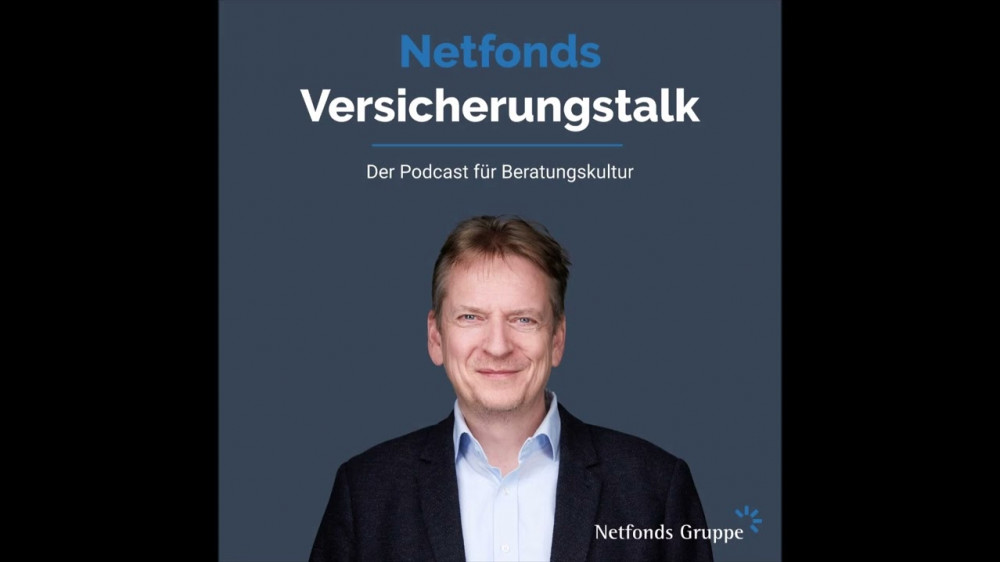
Are you concerned about the long-term security of your retirement savings? In a revealing episode of the Netfonds Podcast, Professor Michael Hauer from the Institute for Retirement and Financial Planning (IVFP) presents a compelling case for strengthening private pension plans. With the weight of future retirement shortfalls looming, Hauer suggests we might need a movement like "Fridays for Retirement" to address systemic gaps. His proposal, developed with colleague Prof. Dr. Thomas Dommermuth, centers on two radical ideas: providing government subsidies without requiring personal contributions and making pension payouts tax-free. This concept challenges current models like the German Riester pension and offers a fresh perspective for anyone engaged in financial planning, retirement advice, or insurance services.
The Three-Pillar Imbalance: Over-Reliance on the State Pension
Professor Hauer doesn't reject the state pension (the first pillar) outright. In fact, he acknowledges the advantages of Germany's three-pillar retirement system, which includes statutory, occupational, and private pensions. The core problem, he argues, is a dangerous imbalance. "The vast majority of employees rely too heavily on future benefits from the statutory pension insurance," Hauer states.
When examining the income of retirees, there's a clear "overweight" towards payouts from this public, pay-as-you-go system. The ideal scenario, according to Hauer, would be a more balanced distribution: roughly one-third of retirement income should come from each of the three pillars. Achieving this balance requires a significant boost to the often-underutilized third pillar: private retirement provision.
The IVFP Proposal: Key Reforms to Incentivize Private Savings
To make private pensions more attractive and effective, Hauer and Dommermuth have crafted a concrete proposal built on two fundamental reforms:
| Proposed Reform | How It Works | Potential Impact |
|---|---|---|
| 1. Subsidies Without Mandatory Personal Contributions | Expand the subsidy system used in Riester pensions, but remove the requirement for individuals to make their own contributions to receive the state bonus. | Lowers the barrier to entry, especially for low-income individuals. It acts as a direct incentive to open and maintain a pension plan, kickstarting savings habits with "free money" from the state. |
| 2. Tax-Free Pension Payouts | Make the retirement income (the annuity or payout phase) completely tax-free for the beneficiary. | Increases the net value of the pension for the retiree, making private plans more financially attractive compared to taxable income streams. It simplifies retirement planning by providing predictable, untaxed income. |
This combination addresses both the accumulation phase (making it easier to save) and the decumulation phase (making the saved money more valuable in retirement).
Why the Current System Falls Short: The Riester Example
The proposal implicitly critiques existing models. The Riester pension, while well-intentioned, ties state subsidies to personal contributions, which can exclude those who cannot afford to save consistently. Furthermore, the complex tax treatment during the payout phase can deter participation. Hauer's model seeks to remove these friction points, creating a simpler, more universally accessible system.
Implications for Financial Advisors and the Insurance Industry
If implemented, such reforms would have significant implications for the financial services sector:
- For Financial Advisors and Insurance Brokers: A more attractive private pension product would become a central tool in retirement planning. Advisors would need to educate clients on the new benefits and integrate these plans into holistic financial strategies.
- For Insurance Companies and Asset Managers: Demand for compliant pension products (like pension insurance or investment funds with a pension focus) would likely increase, driving innovation and competition in product design.
- For Clients: It would democratize retirement planning, making it a viable and rewarding pursuit for a broader segment of the population, not just high earners.
Ultimately, the goal is to shift the cultural and financial mindset from over-reliance on the state to empowered personal responsibility, supported by smart government incentives.
Listen to the Full Discussion
To hear Professor Michael Hauer detail the core concepts of this proposal and discuss the crucial role of the financial services sector in making it a reality, listen to the complete episode of the Netfonds Podcast.
Listen on:
Apple Podcasts | YouTube | Spotify
Insurers and brokers struggle in claims management with high backlogs, increasing claim frequencies, skilled labor shortages, and growing customer expectations. Manual processes are expensive and slow.