Insurance in 2030: The Real Question Isn't What Changes, But What Stays the Same?
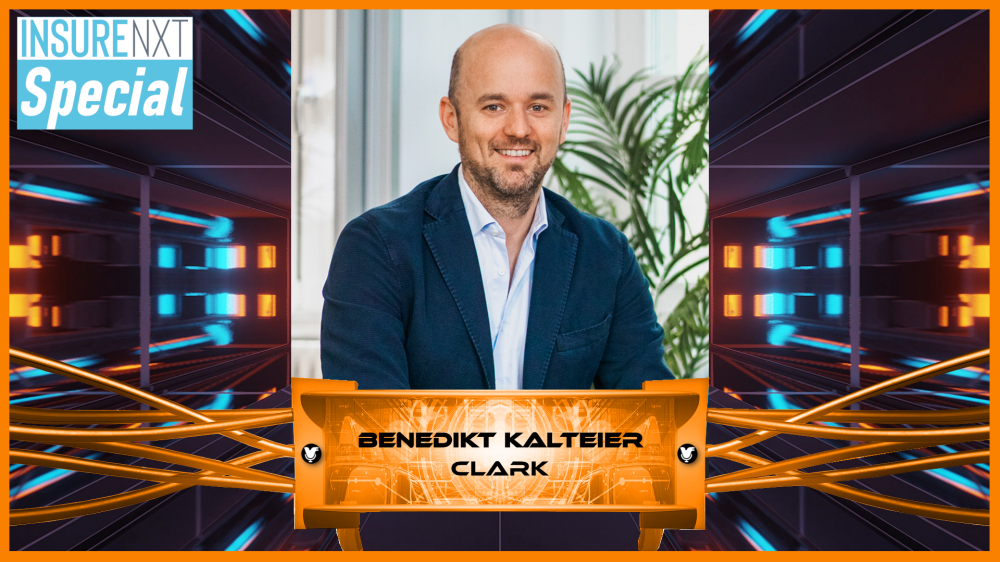
What will the insurance industry look like on February 3, 2030? This is the central question we've been exploring with leaders across the sector. In an exclusive conversation ahead of the insureNXT conference, we sat down with Benedikt Kalteier, CEO of the digital insurance broker CLARK, to discuss the future—specifically, the landscape on October 29, 2030. His perspective offers a refreshing counterpoint to predictions of total disruption, focusing instead on enduring human needs and the evolution of advisory roles. This is crucial for anyone navigating insurance choices, whether comparing Germany's PKV and GKV systems or evaluating private health insurance vs. Medicare plans in the U.S.
Continuity in Distribution: A Multi-Channel Future
Kalteier's focus is not on radical upheaval. "I'm currently thinking more about what will stay the same," he states at the outset. A prime example is distribution. "We will have direct sales, we will have classic agency sales, we will have broker sales. I believe this segmentation will not change." This suggests that, despite digital transformation, diverse insurance sales channels will persist to serve different client preferences, much like how consumers today choose between online portals, independent agents, or captive agents for their policies.
The Strategic Role of AI: Enhancing, Not Replacing, Human Expertise
Technologies like Artificial Intelligence (AI) will undoubtedly change the industry, but their impact will be nuanced and specific. "I believe we will use the human factor very specifically in advisory services and no longer for information gathering and more administrative tasks," Kalteier explains.
At CLARK, the use of AI is already a reality. "We can already partially document advisory conversations using AI today. We support our sales agents with AI, and this will become widespread, I am absolutely certain." However, he draws a clear line on empathy-driven interactions: "I cannot imagine that in five years we will universally handle a claims notification from a bereaved family member [...] via an AI bot." Conversely, he also doesn't foresee lengthy personal consultations for routine matters: "That we will continue to process a liability claim with a hours-long personal advisory conversation—no, I don't believe that either." This highlights AI's role in insurance process optimization, freeing human advisors for high-value, complex, and sensitive client interactions.
The End of the "Average Customer" and the Rise of Hyper-Segmentation
For Kalteier, the future is not about the average customer but about concrete, individualized needs. "I believe the average will become increasingly irrelevant." The key is for insurers to adapt to different customer types and their specific concerns. "There will be people who take out disability insurance via an AI board. They will exist. And I believe we must serve them too."
At the same time, there will continue to be individuals who prefer the analog path: "But there will also be those who say, 'I really want to go to the agent where my father, my uncle, my mother, my grandparents already went.'" CLARK itself pursues a strategy of clear targeting and consistent customer orientation. "We have a very clearly defined customer group with a very clearly defined profile that we want to address." He adds, "We believe that precisely through this approach of thinking from the customer's perspective, we create an offer that is perhaps better than that of our competitors."
Kalteier is critical of providers who still believe a standard approach can serve everyone: "I believe, I don't want to offend anyone, but that is probably also a problem in this industry, that many market participants still believe they can serve everyone with a standard approach."
Insurance 2030: A Balanced Vision of Change and Consistency
| Aspect of Insurance | What Will Likely Change by 2030 | What Will Likely Stay the Same |
|---|---|---|
| Distribution & Sales | AI-driven platforms for simple products; digital onboarding becomes standard. | A multi-channel mix (direct, agent, broker) persists to cater to diverse client preferences. |
| Advisor Role | Shift from admin/data tasks to high-touch, complex, and empathetic advisory services. | The need for trusted human expertise in understanding nuanced needs and building relationships. |
| Customer Profile | The "average customer" vanishes; hyper-segmentation and personalized products dominate. | Core human needs for security, trust, and clear communication in risk transfer remain constant. |
| Technology Use | AI automates documentation, information synthesis, and routine processes. | Technology serves as a tool to enhance, not replace, the human elements of advice and empathy. |
These are just some of the insights from our discussion. To hear the full conversation with Benedikt Kalteier on the future of insurance, including more on customer expectations and strategic focus, listen to the complete podcast episode.
You can find the whole conversation here on Apple Podcasts or Spotify. Listen in—it's a valuable perspective for anyone in insurance consulting or financial planning.
Insurers and brokers are grappling with backlogs in claims management, rising claim frequencies, talent shortages, and growing customer expectations. The path forward, as Kalteier outlines, involves leveraging AI for efficiency while doubling down on the human touch where it matters most—a balanced strategy for thriving in 2030.