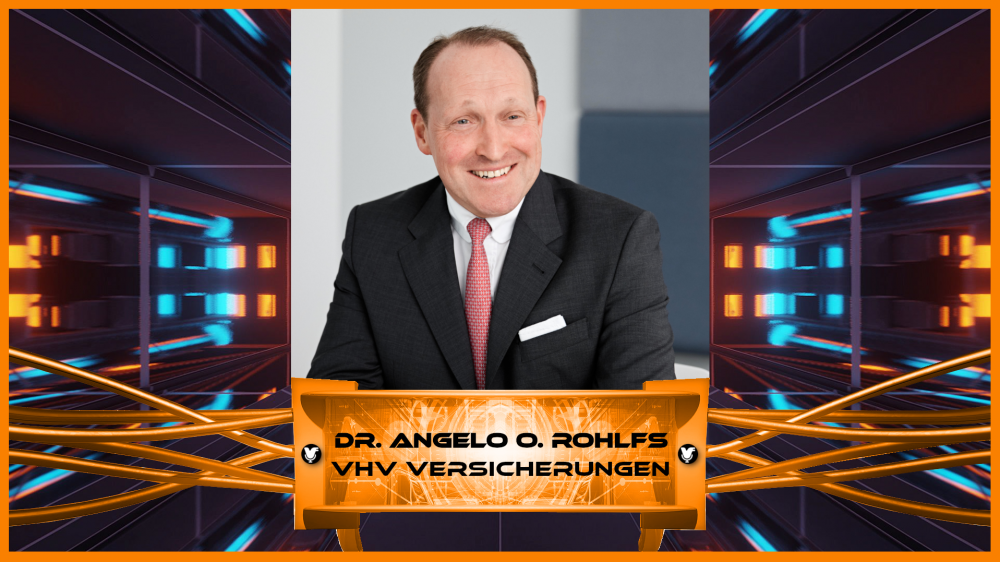
What will the insurance industry look like on February 3, 2030? This is the central question explored in a major industry study and a series of exclusive interviews with leaders like Dr. Angelo O. Rohlfs, Board Member for Sales and Marketing at VHV Versicherungen. His insights provide a clear roadmap for insurance agents, brokers, and financial advisors navigating the dual forces of technological disruption and enduring human need. The future is not about replacement, but transformation.
The 2030 Landscape: Automation Everywhere, Humanity at the Core
Dr. Rohlfs does not foresee a radical upheaval in the core function of insurance—providing intangible financial protection. The revolution will be in interaction. "The insurance industry will become much more automated […] on the process side, on the application side, on the claims processing side, on the customer contact side," he predicts, driven largely by Artificial Intelligence (AI).
Yet, amidst this wave of digital transformation, the human element remains non-negotiable. "There will be a large proportion of people who will continue to want to be looked after by people, who at the end of the day want to look someone in the eye," Dr. Rohlfs asserts. This creates a more complex distribution landscape where advice, products, and services must be hyper-personalized for specific client segments.
The Broker's Evolving Role: From Generalist to Strategic Partner
The traditional broker channel is undergoing a significant metamorphosis, shaped by technology and demographics. Dr. Rohlfs outlines a clear segmentation emerging by 2030:
- The Rise of Self-Service: A significant segment of customers, accustomed to online banking and travel booking, will purchase standard policies via digital self-service platforms.
- The Consolidation Wave: Demographic shifts will see many Baby Boomer advisors retire. The result will be "fewer active brokers, but more portfolio managers and consolidations."
- A Polarized Market: "There will be a small number of really large broker houses—and a large number of small brokers who only manage [existing portfolios]."
- Specialists & Generalists: Alongside this, a growing number of niche specialists will thrive, while classic all-rounders will still have their place for clients seeking a one-stop shop.
The imperative for insurers, according to Dr. Rohlfs, is to "hold suitable offers ready for the different types of intermediaries." This means providing tailored products, digital tools, and support systems for each distinct partner model.
Navigating New Competitors: InsurTechs and Big Tech
The emergence of InsurTech startups and digital broker models is not viewed as a threat but as a source of inspiration. "You are well advised to look at that and consider what you can adapt for your own business model," Dr. Rohlfs advises. He takes a similarly measured view of Big Tech companies (often referred to as GAFA: Google, Apple, Facebook, Amazon). "The GAFAs will consider whether to cut themselves a piece of the pie—and we should observe that attentively." The strategy is one of vigilant learning and agile adaptation, not fear.
Strategic Imperatives for Insurance Professionals
To thrive in this evolving landscape, insurance professionals must take deliberate action. Here is a framework based on Dr. Rohlfs' insights:
| Strategic Focus | Actionable Steps | Expected Outcome |
|---|---|---|
| Embrace Hybrid Advisory | Integrate AI tools for analytics and automation, but reserve high-touch, complex advice for personal interaction. | Increases efficiency for simple tasks, freeing you to provide premium, personalized risk management and financial planning advice. |
| Define Your Niche | Move beyond generalism. Specialize in a client segment (e.g., physicians, small business owners) or product area (e.g., cyber insurance, professional liability). | Builds deeper expertise, creates a defensible market position, and allows for more targeted marketing. |
| Leverage Digital Tools | Adopt a modern tech stack: a robust CRM system, client portals, e-signature solutions, and data analytics platforms. | Streamlines operations, meets modern client expectations for digital access, and provides insights for better advice. |
| Plan for Continuity | If you own a practice, develop a formal succession plan. For individual producers, build systems that make your client relationships transferable. | Protects the value of your life's work and ensures clients are cared for, addressing the industry's looming demographic shift. |
| Become a Learning Organization | Continuously monitor trends from InsurTechs and adjacent industries. Be ready to adapt valuable innovations. | Maintains competitive relevance and prevents disruption by being the disruptor in your own market. |
The industry-wide challenges of manual backlogs and talent shortages make this strategic evolution from a service provider to a tech-enabled advisor not just advantageous but essential for survival and growth.
Dr. Rohlfs concludes the interview with a look at the industry's quirks, predicting how many faxes might still be sent in 2030, and shares a personal message to his future self.
The overarching message is one of confident adaptation. The insurance broker and agent are not disappearing. Their role is evolving from a transactional intermediary to a strategic, tech-savvy advisor and risk manager. By embracing automation for efficiency and doubling down on the irreplaceable value of human judgment, trust, and complex problem-solving, the future remains bright for those willing to adapt.
Listen to the full exclusive conversation with Dr. Angelo O. Rohlfs on the "Versicherungsbranche 2030" podcast, available on Apple Podcasts and Spotify, for deeper insights into shaping the next chapter of your insurance career.