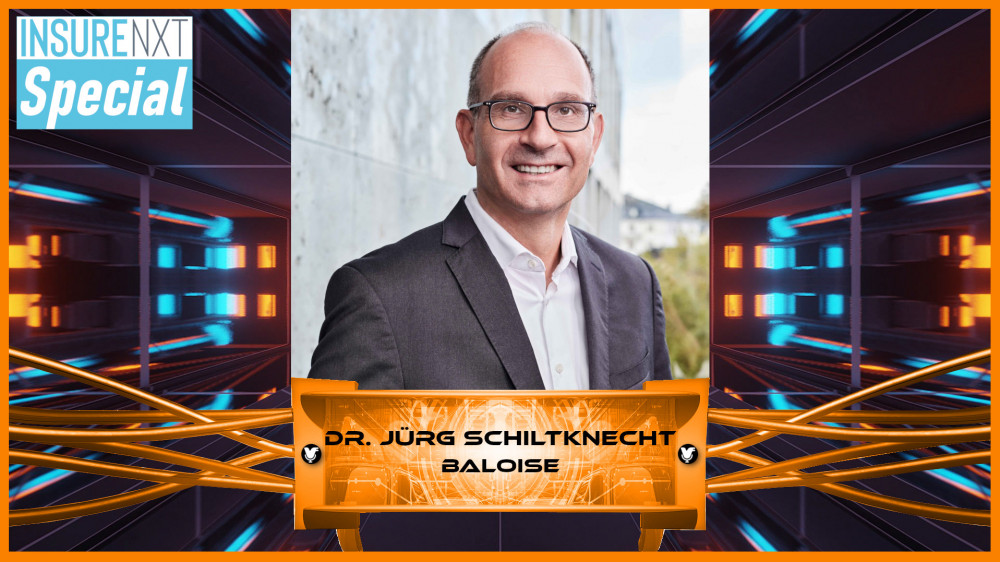
AI, Legacy Systems & The 2030 Insurance Landscape: An Exclusive Interview with Baloise CEO Dr. Jürg Schiltknecht
What will your insurance experience be like on February 3, 2030? Will you file a claim in seconds via a chatbot? Will your policy be dynamically priced by artificial intelligence? Or will you still rely on a trusted human advisor? Dr. Jürg Schiltknecht, CEO of Baloise in Germany, has a clear and nuanced vision for the future. In an exclusive interview exploring the insurance industry of 2030, he delves into the transformative power of AI, the critical timeline for modernizing legacy systems, and the evolving—but enduring—role of the human agent.
For insurance professionals, technology leaders, and anyone interested in the future of financial services, this conversation provides a rare roadmap from the C-suite. Dr. Schiltknecht outlines a future where insurance technology (InsurTech) and artificial intelligence in insurance are seamlessly integrated, not as replacements for human expertise, but as powerful enablers of better service, efficiency, and customer experience.
The AI Imperative: From Use-Case Search to Core Integration
Dr. Schiltknecht acknowledges that the industry is currently in a phase of exploring practical applications for AI. However, by 2030, he expects its influence to be profound and widespread. AI will not be a singular tool but a foundational layer impacting every facet of the business:
| Insurance Function | AI's Projected Impact by 2030 |
|---|---|
| Customer Advisory & Sales | AI-powered chatbots, social media bots, and voice assistants (like Alexa) will handle initial information gathering and simple queries, pre-qualifying leads and educating customers. |
| Claims Processing ("Dunkelverarbeitung") | Straight-through, touchless processing for simple, standardized claims will become the norm, drastically reducing settlement times from days to minutes. |
| Product Development & Pricing | AI will analyze vast datasets to create hyper-personalized, usage-based insurance products and more accurate, dynamic pricing models. |
| Employee Support & Underwriting | AI will act as a co-pilot for underwriters and agents, providing real-time risk analysis, policy recommendations, and administrative automation. |
The Legacy System Countdown: "We Hope to Switch Off the Old System by 2027"
Perhaps the most concrete insight from the interview is the ambitious timeline for core system modernization. Dr. Schiltknecht states that Baloise aims to complete its migration from outdated legacy systems by 2027. This is not just an IT project; it's a strategic prerequisite for the AI-driven future. These old systems are the primary bottleneck to innovation, agility, and data utilization. Their retirement will unlock the ability to:
- Integrate new AI and analytics tools seamlessly.
- Offer truly real-time services and policy adjustments.
- Create a unified, 360-degree view of the customer.
- Radically improve operational efficiency and reduce costs.
This declaration signals a critical industry-wide shift: the race to modernize core infrastructure is the unglamorous but essential foundation for the futuristic capabilities promised for 2030.
The Human Advisor in 2030: The Irreplaceable Hub
Despite the focus on AI and automation, Dr. Schiltknecht presents a compelling case for the enduring centrality of the human insurance agent or broker. He envisions a hybrid model where:
Digital Channels Handle Discovery & Simple Tasks: Customers will increasingly use social media, chatbots, and smart devices for initial research and routine interactions.
The Human Agent Becomes the Trusted Advisor: For complex advice, policy customization, and especially during a claim—a moment of high stress and confusion—the human intermediary will remain the primary point of contact. Their role will elevate from salesperson to holistic risk consultant and advocate.
This future aligns with trends in the US insurance market, where despite the growth of direct-to-consumer models, high-net-worth individuals and those with complex needs (similar to clients of German PKV or comprehensive US Medicare Advantage plans) consistently seek human expertise.
Predictions for 2030: Speed, Faxes, and a Message to the Future
The interview also touched on specific, tangible predictions:
- Claims Settlement Speed: Dr. Schiltknecht anticipates dramatically faster claims payouts, with many simple claims settled almost instantly through automated systems.
- The Fate of the Fax: When asked how many faxes the industry will send in 2030, his answer implies the number will be vanishingly small, symbolizing the end of analog processes.
- A Personal Note to His Future Self: While not revealed in the excerpt, this question prompts reflection on the pace of change and the personal journey of leading a traditional company through a technological revolution.
Conclusion: A Balanced Vision for a Transformative Decade
Dr. Jürg Schiltknecht's outlook for 2030 is neither one of dystopian automation nor of stagnant tradition. It is a balanced, pragmatic vision where insurance technology eliminates friction and empowers both customers and employees, while the human qualities of trust, empathy, and complex problem-solving become more valuable than ever. The key to reaching this future lies in the urgent, behind-the-scenes work of replacing the digital foundations of the industry today.
For anyone involved in insurance innovation, digital transformation, or future-proofing an insurance career, this interview is essential listening. It provides a clear-eyed view from the top on where to invest, what skills to develop, and how to position for the industry of 2030.
Listen to the full podcast episode for Dr. Schiltknecht's complete insights, including his thoughts on future-oriented sales and the customer experience panel at InsureNXT.
Planning your own digital transformation? For strategies on modernizing legacy insurance systems, implementing AI use cases, or developing hybrid human-digital advisory models, guidance from industry leaders and specialized consultants is crucial.