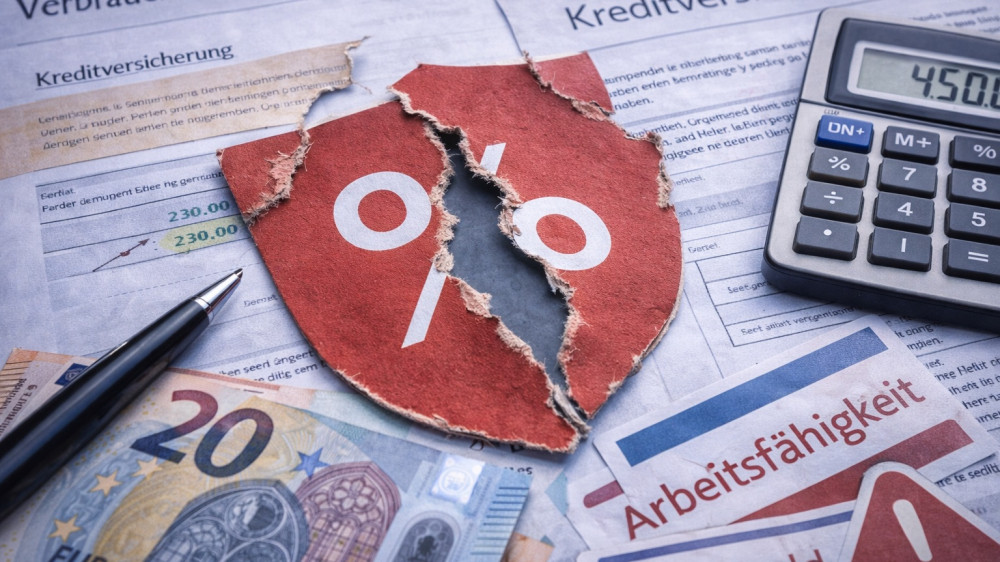
Consumer loans are a common part of financial life for many households. They provide short-term relief, secure personal liquidity, and enable major purchases. But in practice, risks often emerge that borrowers don't fully consider when signing the contract. In economically uncertain times, these protection gaps can significantly impact your financial stability. This guide shows how you can protect yourself from poor decisions through forward-looking planning and solid financial knowledge.
The economic situation in Germany remains tense. For the first time in twelve years, unemployment has risen above three million. Housing, energy, and food prices are still significantly higher than in previous years. At the same time, economic growth is weak—many companies are holding back on investments or new hires. For borrowers, this means financial flexibility is shrinking. Loans that seemed manageable in calmer economic times can become a burden under changed conditions. Already, one in five Germans is planning to refinance. But focusing too much on potential savings can easily make you overlook the associated risks.
When taking out a loan, the interest rate and monthly payment amount are usually the main focus. Far less attention is paid to potential risks that only become relevant during the loan term. These include:
- Loss of income due to job loss, reduced hours, or illness
- Rising interest rates for variable-rate loans or when refinancing
- Unexpected expenses that strain your budget
- Complex contract terms that make it hard to understand true costs
These factors often don't act in isolation but reinforce each other. In economically strained times, this can quickly lead to serious payment difficulties for borrowers.
The potential loss of income is a particularly critical point for borrowers. Although many people generally know their job situation can change at any time, this risk is often not considered when making a loan decision. Even if your income drops, your monthly loan payments remain the same. Without sufficient reserves, you can quickly come under pressure. Bridging existing obligations by taking out new loans can also contribute to a long-term deterioration of your financial situation.
Another risk lies in interest rate developments. In recent years, many consumer loans attracted borrowers with favorable terms. The general rise in interest rates is now significantly changing this environment. Particularly vulnerable are loans with variable interest rates or those nearing the end of a fixed-rate period. Rising rates can substantially increase your monthly burden—and at a time when other costs are also going up.
To protect against loan risks, various insurance products are available that can help in the event of death or permanent disability. Loan protection insurance (Restschuldversicherung) can help cushion financial obligations in an emergency, especially for loans with high amounts or long terms. However, it's important to compare policies carefully, as costs and coverage can vary widely.
Checking loan terms is usually worthwhile: Not every consumer loan is equally risky. Short-term consumer loans with no lasting financial benefit are considered particularly critical. These loans often come with higher interest rates and can noticeably strain your household budget. Combined with rising living costs, this leaves little financial room to respond to unforeseen events. The risk of payment difficulties increases accordingly.
Despite legal information requirements, loan contracts are often difficult for many borrowers to understand. Without solid financial knowledge, technical terms and calculation examples can't always be fully grasped. As a result, borrowers find it hard to make a realistic assessment of their actual burden. To identify potential loan risks, it's therefore advisable to develop a basic understanding of interest rates, terms, and total costs. Independent advisory services can also help borrowers make safe, low-risk financial decisions.
The good news: In recent years, lawmakers have significantly improved consumer protection in the lending sector. Standardized information sheets, withdrawal rights, and transparency requirements are designed to prevent poor decisions. However, these measures don't replace individual risk assessment. For example, mandatory advice on building reserves or protection strategies is not yet required. The responsibility for a realistic assessment of your own financial capacity still lies with the borrower.
To minimize protection gaps, a holistic view of your financial situation is helpful. In addition to current burdens, you should also consider potential changes like rising interest rates or income fluctuations. Building reserves step by step can limit financial risks, as can careful loan planning and making full use of available protection options like loan protection insurance.
Protection gaps in consumer loans are widespread and often underestimated. Even moderate changes in income or interest rates can have significant effects on your financial stability, especially in challenging economic times. While loan protection insurance can be useful, you can best protect yourself through forward-looking planning, gathering important information, and building financial reserves—for loan agreements with a clear conscience and calculable risks.