Berlin's 'Fürst' Real Estate Debacle: A Cautionary Tale for Institutional Investors
The 'Fürst' real estate project in Berlin's west was intended to "replace the architectural stuffiness of the 1970s, which characterized the quarter for many years, with a modern and open building concept." This includes apartments, offices, a 3D cinema, and an atomic shelter converted into a museum.
However, costs for the mega-project are said to have spiraled out of control; no work has been done on the construction site for months. The construction stop even occupied the Berlin Senate. Asked about insights into the causes of the standstill, the Senate administration responded in July of this year: "According to the project Lietzenburger Straße PropCo S.à r.l., difficulties have arisen with required refinancing for the 'Fürst' project. Due to the impact of price increases for steel, concrete, insulation materials, etc., and significant restrictions in material availability, the construction period has been extended, and construction costs have risen enormously. The project has already received an offer from existing creditors who intend to fully finance the cost overrun. However, the complex situation and conflicting interests of all investors still require time to find a consensual solution and complete the project with a one-year extension of the term."
A Controversial Rescue Plan and Deep Investor Rifts
The offer mentioned by the Berlin Senate administration is described by Handelsblatt as follows: "The Pension Fund for the Federal and State Governments (VBL), the asset manager BayernInvest, and the British hedge fund Fidera offered in July to invest an additional 128 million euros. In return, there would be 9.5% interest—also on existing deposits. Other creditors should get five percent."
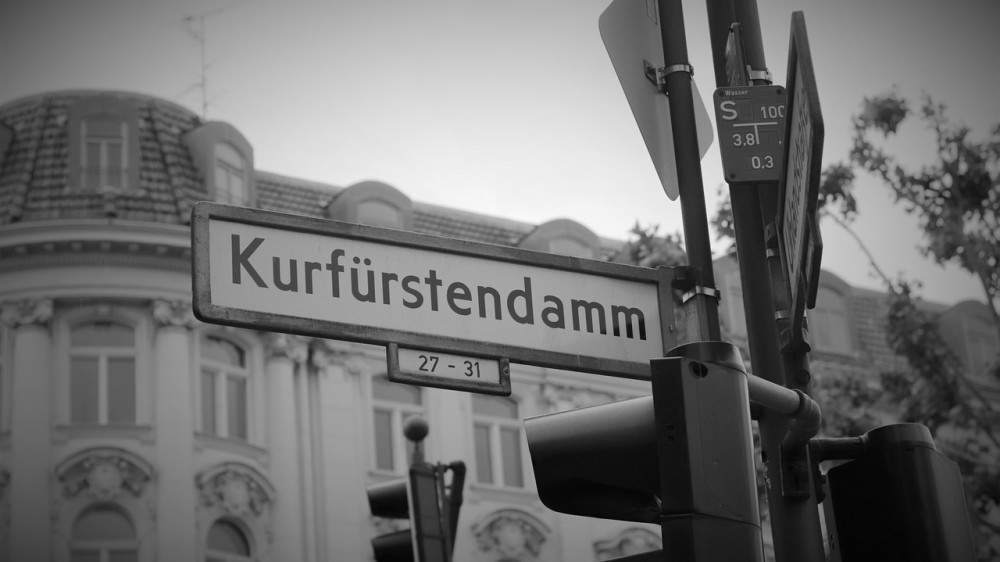
From the perspective of subordinated investors, this is seen as taking advantage; moreover, Fidera is said to have wanted to charge 30 million euros in fees for the plan, writes Handelsblatt. How deep the rifts are among the investors is also evident from the fact that only at the end of September, an investor group, which also includes HUK Coburg, withdrew an insolvency application for the real estate project on Kurfürstendamm.
Legal Battle Over Jurisdiction: A Move to London?
Now, real estate investor and project developer Aggregate, whose project 'Fürst' is, is reportedly planning to move its legal domicile to London. With consequences for the investors. Because there, the 'rescue plan' of VBL, BayernInvest, and Fidera could be enforced more easily and against the interests of smaller investors, according to Handelsblatt.
Against this backdrop, Prof. Dr. Gerd Merke, board member of the Supplementary Pension Fund for the Stonemasonry and Sculpting Trade (ZVK Steinmetz), warns of a total loss for German insured persons and pensioners. Therefore, VBL must not allow proceedings in Great Britain, demands the jurist. If a judgment were made in Great Britain, "our pensioners could lose 100 percent of the money," while Aggregate and Fidera "plan a significant profit," Merke wrote to the Saxon Finance Minister, who simultaneously chairs the administrative board at VBL.
Expert Profile: Dr. Gerd Merke
Dr. Gerd Merke worked for years in the legal department of Siemens Financial Services and took on a professorship for business law at the Wiesbaden Business School in the 1990s. At ZVK Steinmetz, he is responsible for capital investments and was awarded for this just this summer. The specialist portal 'portfolio institutionell' awarded ZVK Steinmetz as "best pension fund/ZVK 2023." The laudation states, among other things, that it is thanks to the "balanced investment policy" of ZVK Steinmetz that the supplementary pension fund was able to achieve a net return between 3.5% and 4.6% in recent years and had to bear only minor hidden losses in 2022.
Key Lessons for Institutional Real Estate Investing
- Concentration Risk: The case highlights the dangers of large, single-project exposures within institutional portfolios, where cost overruns and delays can jeopardize the entire investment.
- Complex Capital Structures: Projects financed through layered debt and equity with different creditor classes create conflicts of interest, especially during restructuring, where senior lenders may impose terms unfavorable to junior investors.
- Jurisdictional Risk: The potential shift of legal proceedings to London underscores how choice of jurisdiction can be used as a strategic tool, potentially disadvantaging certain investor groups.
- Due Diligence on Developers: The role of the project developer (Aggregate) and its decisions significantly impact all investors, emphasizing the need for rigorous vetting of developer track records and financial stability.
- Inflation and Supply Chain Vulnerability: The cited reasons for cost overruns—material price inflation and shortages—are systemic risks that require robust stress testing in project feasibility studies.
The 'Fürst' saga serves as a stark reminder of the inherent risks in large-scale real estate development, even for sophisticated institutional investors like insurers and pension funds. It underscores the importance of conservative underwriting, transparent governance, and clear alignment of interests among all financing parties to protect the retirement savings of millions.