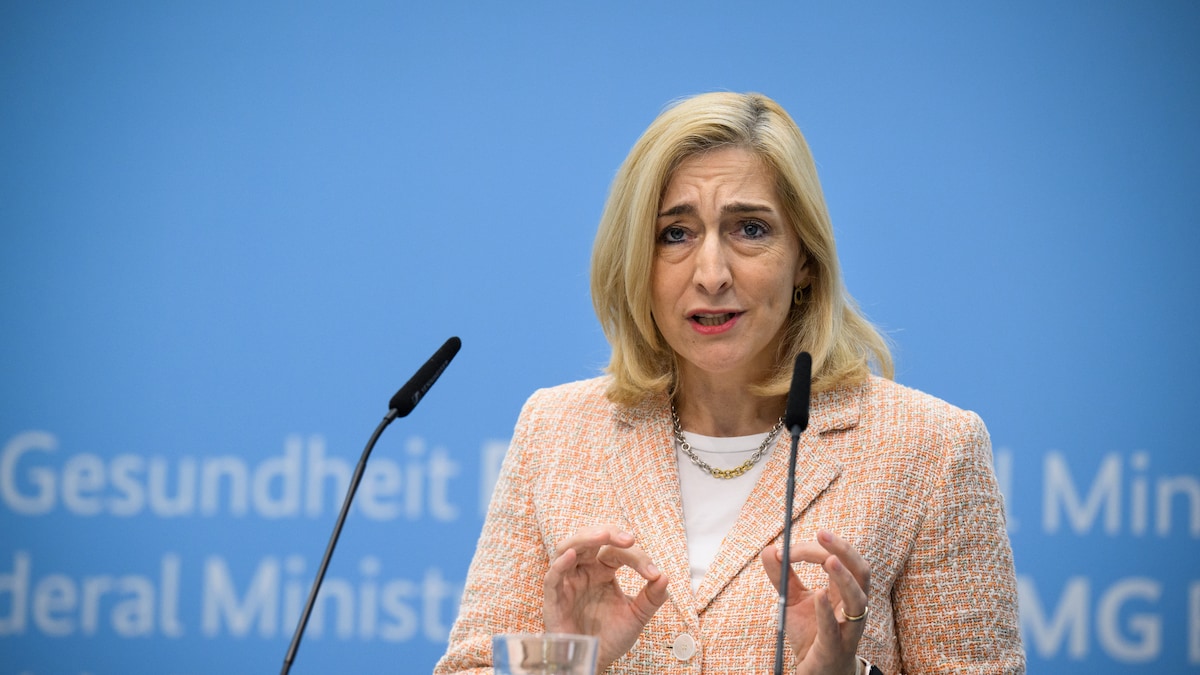
Health Minister's $4 Billion Savings Plan: What Higher Co-Pays Mean for Your Wallet
Germany's statutory health insurance (Gesetzliche Krankenversicherung or GKV) is facing a severe financial crisis. With an aging population, rising costs for innovative treatments and medications, and a €6 billion deficit in 2024, the system is under immense strain. In response, Federal Health Minister Nina Warken (CDU) has drafted a controversial "savings list" aimed at cutting over €4 billion in costs. The cornerstone of this plan? Significantly increasing out-of-pocket payments (Zuzahlungen) for the nation's 75 million publicly insured patients. Here’s a detailed breakdown of what this proposed austerity plan entails and how it could directly impact your healthcare expenses.
The Core Proposal: A 50% Hike in Patient Co-Payments
The most impactful measure for everyday citizens is the proposed increase in mandatory co-payments. Currently, patients pay a fixed contribution for many services. The plan calls for raising these fees by 50% across the board.
| Service / Item | Current Co-Payment | Proposed Co-Payment | Increase |
|---|---|---|---|
| Prescription Medications | €5 - €10 per prescription | €7.50 - €15 per prescription | +50% |
| Hospital Stay (per day) | €10 per day (max 28 days/year) | €15 per day | +50% |
| Rehabilitation Stay (per day) | €10 per day | €15 per day | +50% |
| Medical Aids & Appliances | €5 - €10 | €7.50 - €15 | +50% |
| Ambulance Transport | €10 per trip | €15 per trip | +50% |
The ministry justifies this move as a way to "strengthen the principle of personal responsibility." This measure alone is projected to save the system €1.855 billion annually. For a chronically ill patient with multiple monthly prescriptions and potential hospital stays, the annual financial burden could increase by hundreds of euros.
Beyond Co-Pays: Other Cost-Cutting Measures in the Package
The savings plan is not limited to patient fees. Other proposed measures targeting providers and system efficiency include:
- Reductions in Hospital Funding: Cuts to the base rates (Fallpauschalen) paid to hospitals for treatments.
- Lower Subsidies for Health Insurance Funds: Reducing state subsidies to the statutory health funds themselves.
- Cuts to the Innovation Fund: Reducing the budget of this fund, which finances new forms of care and digital health projects.
- Increased Efficiency Demands on Doctors: Imposing stricter cost-efficiency requirements on outpatient care provided by physicians.
The Bigger Picture: Is This Enough to Save the System?
While the €4+ billion in savings is substantial, experts question whether it addresses the root causes of the crisis. A Deloitte study warns that without deep structural reforms, the GKV's annual funding gap could balloon to €89-98 billion by 2030.
Critics, like Michaela Engelmeier, chair of the Sozialverband Deutschland, argue that constant cuts are the wrong approach. They advocate for:
- Ending Underfunding of "Non-Insurance" Benefits: The state should fully reimburse the GKV for services that are societal tasks (e.g., certain screenings, vaccinations) funded via taxes, not insurance contributions.
- Broadening the Contribution Base: Proposals like a "Bürgerversicherung" (Citizens' Insurance) would require all citizens, including civil servants and the self-employed, to pay into the statutory system, increasing its revenue base. This is conceptually similar to debates in the US about expanding the taxpayer base for programs like Medicare.
What Happens Next? The Political and Procedural Timeline
The proposals are currently just that—proposals. The political process is urgent:
- October 15, 2025: The "Schätzerkreis," a key advisory body, meets to assess the GKV's financial needs and set the average supplemental contribution rate for 2026.
- Ongoing Coalition Negotiations: The CDU/CSU and SPD coalition must agree on a final package. Reports suggest cuts to hospitals and funds are likely, but patient co-pay hikes are more contentious.
- Long-Term Reform: An expert commission is tasked with drafting a comprehensive reform by the end of 2026 for implementation in 2027.
Conclusion: A Stopgap, Not a Solution
Health Minister Warken's savings plan represents a painful but likely inevitable short-term fix to stabilize the GKV. For insured individuals, it means preparing for higher direct costs for medications and hospital care starting potentially in 2026. However, the debate highlights a fundamental crossroads: can the system be sustained long-term through incremental cuts and higher cost-sharing, or does it require a radical overhaul of its financing model? The coming months will determine not just your pharmacy bill, but the very structure of German healthcare for decades to come.