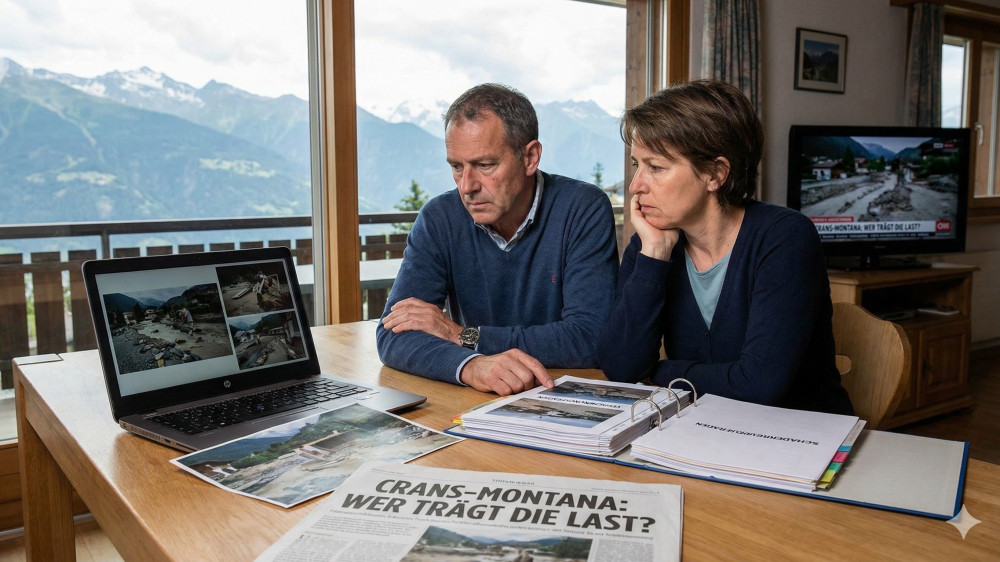
Beyond the Headlines: The Shared Responsibility of Media and Insurance After a Disaster
When tragedy strikes, like the devastating fire in Crans-Montana, the immediate aftermath is a whirlwind of emergency response, media scrutiny, and public shock. But what happens after the cameras leave and the headlines fade? For the victims, the real journey—a long, arduous path of physical recovery, psychological trauma, and financial uncertainty—is just beginning. This journey places a profound and often overlooked responsibility on two powerful institutions: the media and the insurance industry. Their actions can either compound the trauma or provide a crucial foundation for healing and stability.
The Media's Dilemma: Speed vs. Dignity in Catastrophe Coverage
In our 24/7 news cycle, disasters are instantly transformed into communicative events. The systemic logic of media demands constant updates, live feeds, and immediate analysis. While public information is vital, this velocity often collides with the fundamental human need for dignity.
Dignity requires time, space, and the right to privacy. In the frantic early hours and days following an event like Crans-Montana, victims' raw grief and disorientation are often abstracted into statistics—"the injured," "the deceased." The overwhelming focus quickly shifts to the blame and cause analysis: Were building codes adequate? Was fire protection sufficient? Who is liable?
While these are necessary questions, their immediate prioritization serves a societal need to explain the inexplicable, to create a semblance of control. For victims, however, this public narrative can feel like a second alienation. Their personal suffering becomes a backdrop for a broader societal inquest. Responsible journalism must navigate this tension, informing the public without instrumentalizing pain, and knowing when silence speaks louder than words.
The Insurance Imperative: From Claims Processor to Pillar of Recovery
As public attention wanes, the role of the insurance sector becomes paramount. For victims, insurance is not a abstract contract but the determining factor in their future quality of life. It dictates access to long-term medical care, psychological support, home modifications, income replacement, and rehabilitation. In this context, an insurer's responsibility extends far beyond formal claims adjustment and loss assessment.
There exists a fundamental tension: severe personal injuries follow an unpredictable, non-linear path of recovery, while insurance systems are built on criteria, definitions, and a drive for closure. Victims often describe the claims process as a "second examination," where they must continually prove their suffering, navigate complex liability insurance webs, and face assessments that can feel cold and invasive.
The core challenge for insurers is to bridge this gap. How can a system designed for efficiency operate with humanity? The answer lies in redefining service as genuine care.
A Framework for Responsible Action: Lessons from Crans-Montana
The tragedy offers clear lessons for both media and insurance on how to serve with responsibility in the wake of disaster.
| Stakeholder | Common Pitfall | Responsible Practice |
|---|---|---|
| Media Organizations | Prioritizing speed and sensationalism over depth; forcing narratives of blame; violating victim privacy. | Practice restrained, dignified reporting. Separate necessary information from gratuitous detail. Maintain coverage as long-term issues (like insurance battles) emerge, not just during the initial crisis. |
| Insurance Companies | Treating claims as purely transactional; using complex, legalese-heavy communication; causing delays that exacerbate financial anxiety. | Appoint dedicated, empathetic case managers. Simplify communication and provide clear timelines. Expedite interim payments to alleviate immediate financial stress. Separate factual liability investigation from moral judgment. |
| Both Institutions | Viewing the event as a "case" to be closed, rather than a human story that unfolds over years. | Recognize that long-term psychological trauma (PTSD, anxiety) requires long-term support. Collaborate to ensure victims are not lost in procedural gaps between first responders, media, and financial systems. |
The American Parallel: Insurance Response After Major Disasters
For readers in the United States, the dynamics following Crans-Montana will feel familiar. Consider the aftermath of a major wildfire in California or a hurricane in Florida. The initial media storm is identical. The insurance challenges are also parallel, though the systems differ. Victims navigate complex interactions between homeowners insurance, flood insurance (often separate), health insurance (private or through employers), and potential liability claims. The same principles of empathetic, efficient, and transparent service are critical, whether the policy is a German Haftpflichtversicherung or an American umbrella liability policy.
Conclusion: Redefining the Role of Institutions in Recovery
The Crans-Montana fire forces us to ask a fundamental question: Who does the story belong to after the event? The answer must be: first and foremost, the victims. The media and insurance companies are not owners of this narrative but essential companions in the journey that follows.
A mature societal response to catastrophe is measured not in the intensity of the initial reaction, but in the sustained, dignified support provided in the months and years that follow. It requires institutions to be pillars of trust, not just processors of information or claims. For insurers, this means seeing disaster recovery and victim support as core to their mission. For the media, it means wielding influence with conscience. In the fragile space between headline and healing, that is where true responsibility lies.