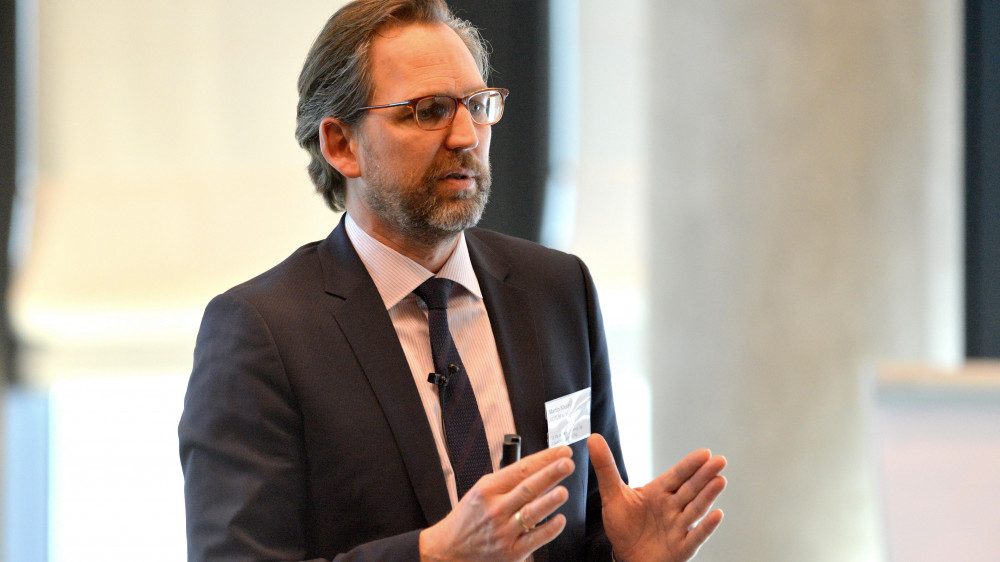
Insurance Broker Reputation: Why Personal Relationships Trump Negative Perceptions
Regarding the insurance intermediary industry's poor image and increasing investor engagement in broker pools, we interviewed VOTUM Board Member and legal expert Martin Klein in the second part of our Versicherungsbote interview. His insights reveal why personal client relationships remain strong despite broader industry perception challenges and what trends will shape the future of insurance brokerage.
The Reputation Paradox: Industry Image vs. Client Experience
When asked why the intermediary industry still suffers from a poor reputation despite increased demand for personal advice during crisis times, Klein acknowledges historical missteps: "We've certainly made mistakes in the past—creating market access for everyone and anyone. Think of Göker or similar cases that were also processed in the media. Such things certainly contributed to worsening the intermediary image."
However, he immediately contrasts this with client reality: "Nevertheless, the close-up image is very positive with many customers you're in dialogue with. People repeatedly come to me and say: I have an advisor on my side whom I can completely rely on."
This reputation gap between industry perception and individual experience highlights a crucial dynamic for insurance professionals. Klein explains the path to reputation improvement: "As soon as intermediaries and advisors show they're not just with customers for the sale situation but over the policy term, sometimes across generations within families—and many companies in our association have thirty, forty, fifty years of experience—then this negative image wears away."
The Bureaucracy Challenge: Adaptation Over Expectation
When asked about overwhelming bureaucracy facing customer service—frequent imprint changes, numerous signatures required for contracts—Klein expresses tempered expectations: "Regarding the legislature, I've actually somewhat given up hope that they can push through bureaucracy reduction. We keep giving this impulse that something must actually come. But I think: We currently won't experience the legislature significantly relieving the intermediary industry. Rather, we must deal with the circumstances."
He identifies positive developments in smaller areas: "We experienced during the Corona crisis that we can maintain advisory services at a distance, which is why nowadays we might only need text form but not urgently written form. We can manage electronic contract conclusions from a legislative perspective and use many tools there. But the trend came more from digitalization and less from regulation, to be completely honest. Regulation actually lagged behind there."
| Industry Challenge | Current Reality | Future Outlook |
|---|---|---|
| Bureaucratic Burden | Increasing documentation and compliance requirements | Limited legislative relief expected; adaptation necessary |
| Digital Transformation | Accelerated by pandemic, driven by market not regulation | Continued evolution of electronic processes |
| Retirement Planning | Uncertainty about Riester successor product | Mixed signals from government initiatives |
Investor Interest: Validation of Market Attractiveness
Regarding increased foreign investor activity in broker pools—sometimes from non-EU countries—Klein offers an optimistic interpretation: "This is actually an exciting development because it suggests that obviously the broker market in Germany is attractive. Money only flows where there are attractive return opportunities. That means: people obviously believe in the profession and that it has a future in Germany. That needs to be said sometimes."
He continues: "These aren't just any investors deciding from gut feeling, but they approach with a certain goal and say: 'Where are there still attractive returns to be generated? And where do we also have a politically safe environment?' And that's actually a positive view of the broker market."
Regarding concentration risks: "I do see the tendency to consolidate many small providers into platforms. But this is also because small providers are increasingly forced to invest more money to develop attractive technical solutions. You don't do that with two people in a garage anymore; that requires manpower and effort. And that must be counter-financed; that requires capital. Therefore, this concentration process is completely normal from my perspective."
Portfolio Management and Succession Planning
Klein observes positive developments in portfolio management and succession solutions: "On one hand, we have brokers actively taking care of portfolio succession and who will manage the portfolio in the future. And on the other hand, there are brokers who say: 'I can't even do my job today the way I want to, but I also don't know anyone who wants to deal with my portfolio.' These then use pools, receive a kind of 'broker pension' for a certain time, and simultaneously have the secure feeling that there's a new manager for their portfolios."
He emphasizes the importance of this trend: "I really see this positively. Because unmanaged portfolios are also something that doesn't help our image—if the customer, for example, doesn't know what to do in a situation and has no contact person. That's not good. Therefore, I consider portfolio purchases under the auspices of a pool to be a very good instrument so that portfolios don't lie around unmanaged somewhere, but there are also contact persons for customers."
Comparative Perspective: German vs. American Broker Challenges
For American insurance professionals, Klein's observations about German broker challenges reveal interesting parallels with U.S. market dynamics:
- Both markets face reputation gaps between industry perception and individual advisor relationships
- Both systems struggle with increasing regulatory complexity and documentation requirements
- Both industries see consolidation through investor activity and platform development
- Both environments require succession planning solutions for aging advisor populations
Just as U.S. independent agents navigate carrier relationships and compliance requirements, German brokers balance pool partnerships with maintaining client service quality and independence.
Future Trends for Insurance Professionals
Klein identifies several key developments intermediaries should monitor:
- Technical Accessibility: Ensuring portfolio access and legal flexibility with termination periods
- Product Knowledge: Maintaining good overview of policy conditions and comparison capabilities
- Market Access: Preserving broad market access through technically sound environments
- Sustainability Integration: Embracing sustainability as an essential client expectation
He particularly emphasizes sustainability: "Which trend we all mustn't miss also from inner conviction is the sustainability topic. No broker should say: this wouldn't interest their clientele, customers don't care. Of course, there will always be customers for whom sustainability isn't important or is only 'nice to have.' But you shouldn't rely on these customer groups; they will shrink. And the next customer groups you develop will consider sustainability as self-evident—and will also naturally expect that a broker or financial investment intermediary can give them explanations about sustainability. You should definitely be involved in this topic."
For insurance brokers and agents on both sides of the Atlantic, Klein's insights reinforce that while industry challenges persist, personal client relationships built on trust, service, and expertise remain the foundation of sustainable practice.