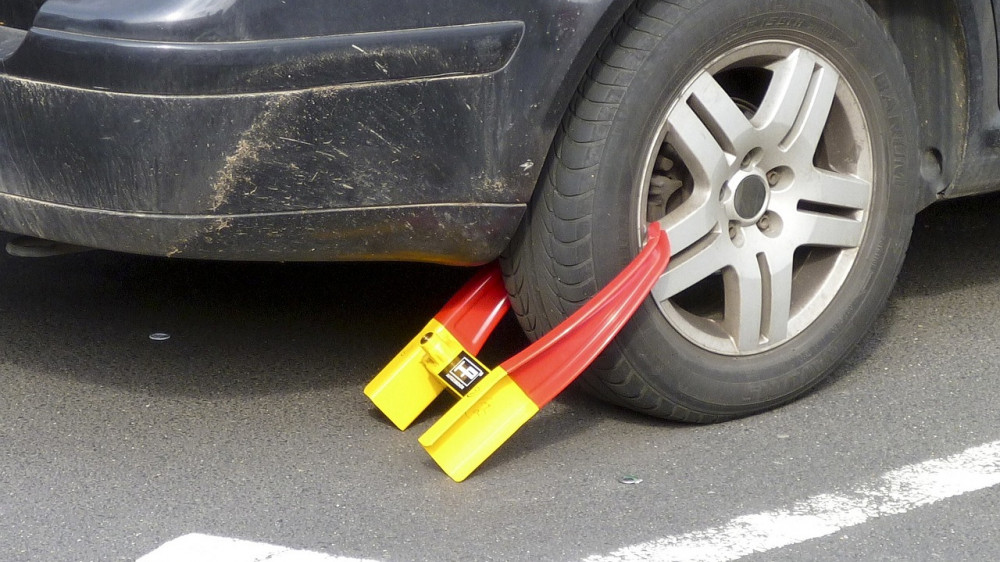
Wheel Clamp Damage: Is It Covered by Your Comprehensive Car Insurance?
Imagine getting into your car, unaware that a wheel clamp (Parkkralle) has been attached. As you drive off, you hear a terrible crunch—the clamp has severely damaged your wheel, axle, or undercarriage. After the shock wears off, a critical question arises: Will my comprehensive car insurance (Vollkaskoversicherung) cover this? A seemingly bizarre case, recently decided by the German Insurance Ombudsman, provides a clear and important answer that clarifies a key principle of auto insurance coverage.
The Case: An Unseen Clamp and a Denied Claim
A driver found his vehicle had been fitted with a wheel clamp without his knowledge. Unaware of the immobilizing device, he attempted to drive away, causing significant damage to his car. He naturally filed a claim under his comprehensive coverage, which is designed to cover damage to your own vehicle from a wide range of incidents like collisions, theft, vandalism, and fire.
The insurer initially denied the claim. Their argument centered on the definition of an "accident" or "insured event." They contended that because the wheel clamp was firmly attached to the vehicle, the damage was not caused by an "external event" (Einwirkung von außen), which is a standard requirement in comprehensive policies. They viewed the clamp as part of the car at the moment of damage.
The Ombudsman's Ruling: Why It Was an "External Event"
The driver appealed to the Insurance Ombudsman, who ruled in his favor. The Ombudsman's reasoning provided crucial clarification on insurance law:
- The Purpose of the "External Event" Clause: This clause is primarily intended to exclude damage caused by internal operational processes—like mechanical failure from wear and tear, engine seizure, or electrical shorts. The damage in this case was not caused by the act of starting or driving itself, but by the unforeseen and external obstruction (the clamp) that interfered with normal operation.
- Legal Precedent: The Ombudsman cited a landmark 1954 ruling by the German Federal Court of Justice (BGH, Az. II ZR 65/53). In that case, a mechanic accidentally left a screw in the oil pan, which later caused engine failure. The court ruled this constituted an "external event" because the screw was a foreign object that entered the engine from outside its normal operating system. The wheel clamp was deemed analogous—a foreign object attached to the vehicle from the outside, causing damage.
Result: Following the Ombudsman's intervention and this legal reasoning, the insurer re-evaluated the case and agreed to cover the damage.
What This Means for Your Comprehensive Car Insurance Coverage
This case sets an important precedent for policyholders. It reinforces that the "external event" requirement should be interpreted broadly in favor of coverage for unexpected, accidental damage caused by external interference.
| Damage Scenario | Typically Covered by Comprehensive Insurance? | Explanation & Relation to the Clamp Case |
|---|---|---|
| Driving with a wheel clamp | YES (as per this ruling) | The clamp is an external object attached without the driver's knowledge, causing accidental damage. |
| Running over road debris (e.g., a piece of metal, a large rock) | YES | Clear external event from a foreign object on the road. |
| Vandalism (keyed paint, broken windows) | YES | Malicious external action by a third party. |
| Engine damage from a foreign object left during repair (like the BGH screw case) | YES | Direct precedent. The object is external to the engine's normal components. |
| Mechanical breakdown due to normal wear and tear (e.g., timing belt snaps from age) | NO | This is an internal failure, not an external event. It's a maintenance issue. |
| Damage from intentionally driving over a curb | Likely NO | This could be considered gross negligence or an intentional act, which are often excluded. |
Action Steps if You Face a Similar Claim Denial
- Review Your Policy Wording: Understand the exact definition of an "insured event" or "accident" in your comprehensive car insurance contract.
- Cite the Precedent: If your claim for similar external object damage is denied, reference this Ombudsman case and the 1954 BGH ruling. Politely ask the insurer to reconsider based on this established interpretation of "external event."
- Document Everything: Take photos of the damage and the cause (e.g., the clamp, the debris). Get a police report if vandalism or illegal clamping is suspected.
- Appeal to the Ombudsmann: If the insurer refuses, you can file a complaint with the German Insurance Ombudsman (Versicherungsombudsmann). This is a free, independent arbitration service.
Key Takeaway for Drivers
Your comprehensive auto insurance is designed to protect you from a wide array of unforeseen accidents, not just collisions. Damage caused by an external object—whether it's a wheel clamp, road debris, or a tool left in the engine—generally qualifies for coverage, as it is not a result of internal failure or wear and tear. Don't automatically accept a denial for such claims. Be prepared to advocate for your coverage rights based on clear legal precedents.
Analogy for US Readers: This case is similar to a US driver whose car is damaged by a city-installed wheel boot. While US comprehensive auto insurance policies also require a "direct and accidental loss," insurers might initially deny it, arguing the driver "should have seen it." However, successful claims often hinge on proving the boot was not reasonably visible. The German ruling strengthens the policyholder's position by focusing on the object's external nature. In the US, the outcome can depend more on state law and specific policy wording regarding negligence, but the core principle—damage from an external, affixed object—is a strong argument for coverage.