From Police Badge to Insurance Broker: Building a Thriving Niche Practice
Have you ever considered a dramatic career change to pursue your true passion? Kai Buczinski did just that, leaving behind the security of a lifetime appointment as a police officer to build a successful insurance brokerage focused on a market he knows intimately: fellow law enforcement professionals. His journey from public service to entrepreneurship is a masterclass in niche specialization, authentic marketing, and finding fulfillment in the insurance industry. In this interview, he shares the insights that drove his decision and the strategies that make his practice, including the Finanzwache GmbH & Co. KG, a standout success.
Choosing Passion Over a Pension: The Leap into Insurance
Q: You were on the path to becoming a police officer. Why did you choose the uncertainties of the free market over a secure civil service career?
A: I didn't just start the path—I achieved it: a lifetime civil service appointment, which many people dream of. However, I realized that the civil service system, with promotions based largely on seniority, wasn't as fulfilling for me as self-employment, where performance directly leads to success. I simply decided I wanted to do something that fulfills me. And honestly, I find that more in my current work as an insurance broker than I did in the police force.
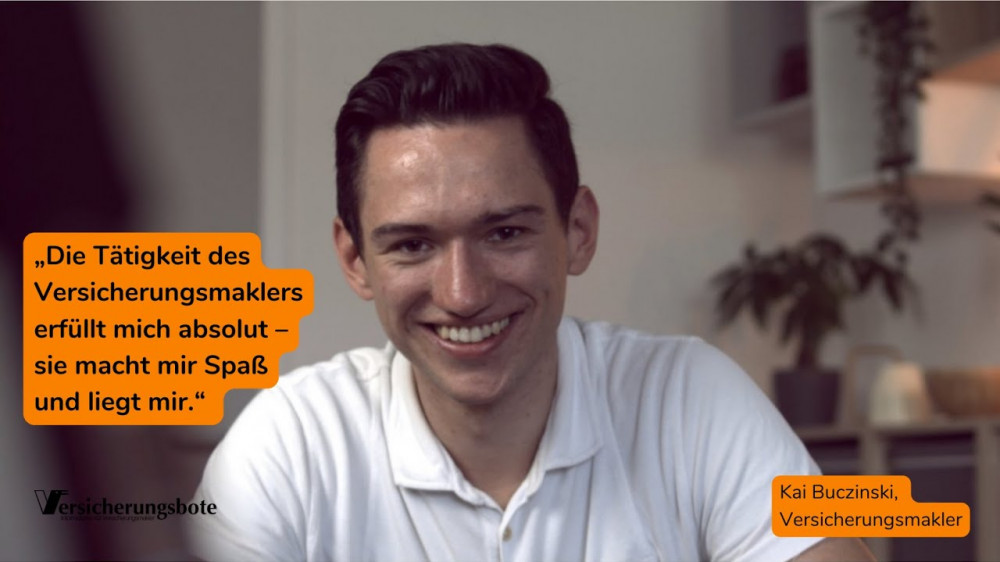
The work of an insurance broker fulfills me absolutely—it's enjoyable, suits my skills, and is performance-based. Those who deliver here can achieve a lot. I have a good feeling about it because when someone is well-insured or has a solid investment, it creates tremendous long-term value in my eyes. This value helps not only the policyholder but also their family. That positive impact made it worthwhile for me to leave behind the lifetime appointment. I preferred to pursue a path where I could achieve more in the long run.
Transforming Industry Perception Through Client Advocacy
Q: With your move into insurance brokerage, you switched from one of Germany's most respected professions to one often viewed less favorably. How do you handle the industry's image? And what can you do to improve it?
A: I've actually heard that statement a few times, especially in podcast interviews. Personally, I've never really felt that way or thought much about it. But it's true: a police officer is highly respected. Although, it always depends. As a police officer, you also have a "clientele" that doesn't think highly of the police and doesn't like that you're an officer.
I don't feel that we, as insurance brokers, have a terrible image. On the contrary: I am highly valued by my clients. As a police officer, you often get negative vibes. In client consultations, it's always completely relaxed.
And what can you do to polish the image of the broker? Quite simply: persuasion succeeds through witnesses. That's why I think it's important to publish testimonials—customer voices. I like to do that: if someone writes me a good review, I share it. I've even made a video with my clients—such things are most convincing. Because when clients—in my case, police officers—say I do good work that brings them great value, it also helps polish the industry's image.
Leveraging Digital Marketing for Niche Growth
Q: How much time do you spend per week on YouTube, Instagram, Facebook, and TikTok to produce your content? And what value do you derive from it?
A: Fundamentally, I spend a fair amount of time. Because the value that comes from it is gigantic. For example, I acquire a large portion of my clients through YouTube. I often get feedback that clients have listened to my podcast or have been on my Instagram. This means: This whole social media topic brings me extreme value because I acquire my clientele—aside from a few referrals—practically almost exclusively through it.
Currently, I must say, I'm investing a bit less time—maybe an hour a day for Instagram and TikTok, and one to two hours a week for YouTube. I've scaled this back because we're very busy with the new establishment of Finanzwache. But I still spend about an hour and a half daily because it brings enormous value.
Specialized Insurance for Law Enforcement: Key Considerations
Q: What makes insuring police officers so special? What should clients and brokers pay particular attention to?
A: Insuring police officers is definitely very special, as there are a few points to note. Many people deal with the topic of civil servant insurance, particularly private health insurance—that's already a specialty in itself. But with the police, it's even more specialized. Because here, there's not only the civil servant healthcare allowance (Beihilfe) with specific rules but also the so-called freie Heilfürsorge—a special form of statutory health insurance.
You also need to know: Each police force is essentially its own employer and, so to speak, bakes its own cake or cooks its own soup. This means: there are special regulations and peculiarities everywhere—for each federal state plus the federal police and the BKA (Federal Criminal Police Office). So, there are many different peculiarities and nuances here.
Therefore: Police officer is not just police officer. You simply have to look very closely: In which federal state does the officer work, what is their role? Because this also has a massive influence on what they need in terms of coverage and what they don't.
Scaling Success: Life After the Young Broker Award
Q: Last but not least: You were also a finalist for the Young Broker Award. What has changed professionally for you since then?
A: Since the Young Broker Award, a lot has definitely happened for me—practically right after the final, the founding of Finanzwache really took off. And Finanzwache is now Finanzwache GmbH & Co. KG—where we unite several cooperating brokers, introducing them to the topic of police insurance. The brokers also receive clients from us for consultation. There's, of course, all sorts to do: writing consultation concepts, giving training; but also doing marketing to acquire new clients. We now have four cooperating brokers. And we've also created several digital concepts. Therefore, since the Young Broker Award, the topic of managing Finanzwache has been at the forefront.
I no longer do all the consulting alone; other cooperating brokers do that too. This is something to expand further in the future. So: Things are moving forward in huge leaps, which is why a lot has changed in the daily work routine since then.
Insurers and brokers struggle in claims management with high backlogs, increasing claim frequencies, skilled labor shortages, and growing customer expectations. Manual processes are expensive and slow.