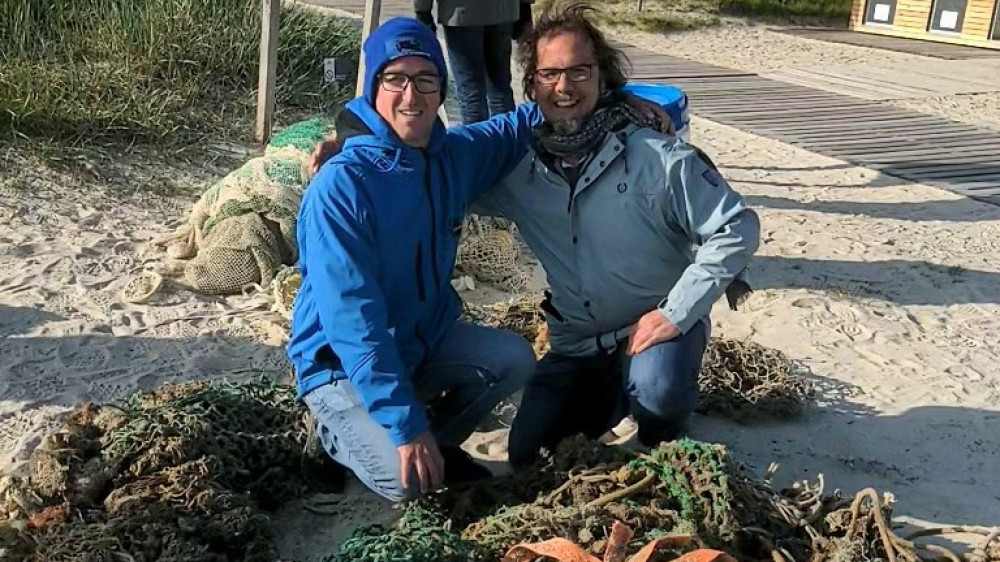
Turning Commitment into Action: The Insurance Industry's Dive for Sustainability
Corporate Social Responsibility (CSR) is a term often heard in boardrooms, but how does an industry translate it into tangible, positive impact? The German insurance sector provided a powerful answer with "Project Ostfriesland." In a collaborative effort timed around World Oceans Day, the industry facilitated the removal of a staggering 700 kilograms of ghost nets from the North Sea, setting a new benchmark for environmental stewardship and authentic CSR.
What Are Ghost Nets and Why Is This Mission Critical?
Ghost nets are fishing nets lost or deliberately discarded at sea. These synthetic webs continue to drift or snag on the seabed for decades, functioning as invisible killers. They entangle and drown marine life—from fish and crustaceans to seals, dolphins, and seabirds—in a process called "ghost fishing." As they slowly break down, they contribute to the pervasive crisis of microplastics, poisoning the food chain. Removing them is a direct, vital intervention for ocean health.
The Driving Forces Behind Project Ostfriesland
This initiative was not led by a massive corporate PR department but sprang from the vision of individuals within the industry. The mastermind was Timo Vierrow, a specialist insurance broker for divers (Makler für Taucher). His innovative concept to mobilize industry resources for ocean cleanup earned him the OMGV Award in the "New Paths. New Media." category in 2022.
The project's execution was a partnership model:
- Expertise & Execution: Professional volunteer divers from Ghost Diving Germany, who performed the dangerous underwater recovery work.
- Funding & Support: The insurance initiative bessergrün, spearheaded by NV Versicherungen, which provided crucial financial backing and organizational support.
- Industry Engagement: Broader participation and sponsorship from within the insurance community.
Vierrow detailed the project's origins and challenges in an insightful podcast episode, highlighting how a niche idea can grow into a significant industry-wide mission.
Overcoming Challenges: A Mission of Persistence
Environmental action is rarely straightforward. During the May 2023 operation, rough seas and high waves limited diving to just three of the five planned days. Despite this setback, the team's perseverance paid off spectacularly. The 700kg haul not only surpassed the previous year's 520kg but also symbolized a resilient commitment to the cause. As Derk Remmers of Ghost Diving Germany noted in his project recap, every kilogram removed is a step forward, even as the scale of the problem—highlighted by plastic pollution found even in the Mariana Trench—remains daunting.
Why This is a CSR Best Practice for the Insurance Industry
"Project Ostfriesland" transcends a simple charity event. It embodies the core principles of effective Corporate Social Responsibility:
| CSR Principle | How "Project Ostfriesland" Exemplifies It |
|---|---|
| Authentic Impact | Delivered measurable, physical results (700kg of waste removed) that directly address a global environmental issue (marine pollution). |
| Strategic Alignment | Leveraged industry connections (broker networks, insurer initiatives) and aligned with the risk-mitigation ethos of insurance by tackling a systemic environmental risk. |
| Stakeholder Engagement | Collaborated with expert NGOs (Ghost Diving), involved media, and engaged the public, creating shared value beyond the corporate sphere. |
| Transparent Communication | Invited over 350 guests and journalists, generating coverage in major outlets like Süddeutsche Zeitung, Die Zeit, SAT.1, and NDR. This "do good and talk about it" approach amplified the environmental message and positively shaped the industry's public image. |
| Building Brand Purpose | Moved beyond selling policies to demonstrating a genuine commitment to protecting assets in the broadest sense—including our natural environment. |
The Ripple Effect: Beyond 700 Kilograms
The true success of this project lies in its demonstration effect. It proves that the insurance industry—often perceived as abstract and financial—can play a hands-on, constructive role in societal challenges. It shows employees, clients, and prospects that their partners are invested in a sustainable future. This builds trust, enhances brand reputation, and fulfills a growing consumer expectation for businesses to have a clear, positive social and environmental stance.
In conclusion, "Project Ostfriesland" is more than a cleanup; it's a case study in how to operationalize CSR. It provides a replicable blueprint for other sectors: identify a tangible problem, partner with the right experts, commit resources authentically, and communicate the journey transparently. For the insurance industry, it hauled in 700kg of nets and, more importantly, set a new standard for corporate responsibility.