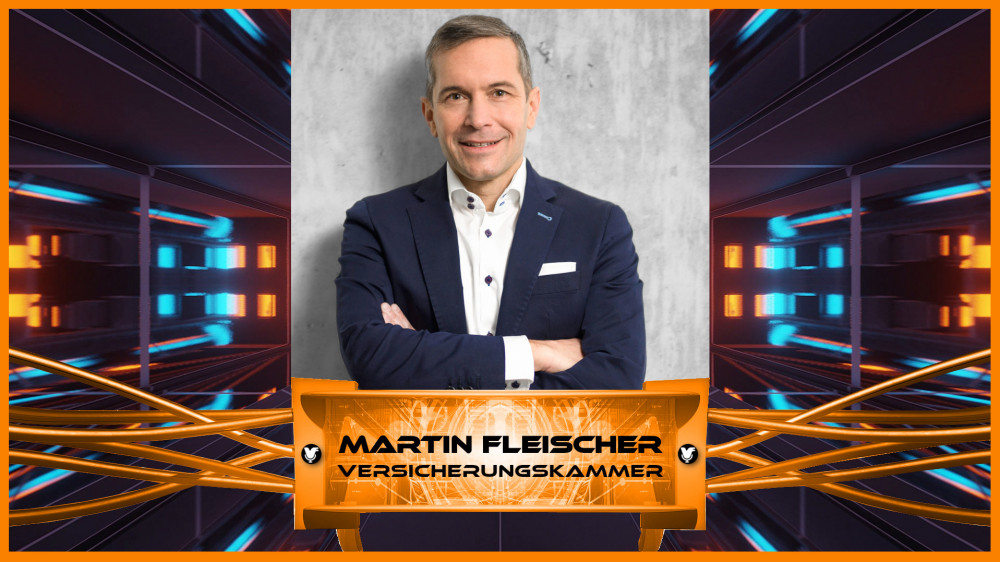
"A Payout Plan Until Age 85 Isn't Enough. You'd Be Broke." A Board Member's Warning on Health System & Insurance Future
How will the insurance industry and the healthcare system change in the next 2030 days? Martin Fleischer, a board member of the Versicherungskammer Group, addresses this critical question in the Versicherungsfunk podcast. His warning is stark: "If we don't get a handle on spending, the system will collapse." This exclusive interview delves into the necessary reforms, the role of technology, and the enduring value of human trust.
The 2030 Vision: A System Under Pressure
What will the insurance industry look like on February 3, 2030? This is the central question of a ongoing series exploring the near future. In this episode, Martin Fleischer shares his insights, focusing heavily on the German healthcare system, which he describes as "one of the best, if not the best healthcare system in the world. But also one of the most expensive." The discussion centers on what must be done to ensure its future viability.
The Core Problem: Overutilization and the Path to Efficiency
A primary driver of costs in the German system is overutilization. Fleischer points out that while Europeans visit the doctor on average two to three times a year, the figure in Germany is between ten and eighteen visits. To address this, he envisions a triage system powered by digital tools: "First describe symptoms via an app, then speak with a doctor via video consultation—and this doctor decides if and where you need to go."
He gives a personal example, detailing how his family became "power users" of the dermanostic app, which uses AI to improve dermatological care. The app reportedly saved a family vacation by providing quick, remote specialist advice. This illustrates the potential of digital health solutions and telemedicine to streamline care and improve accessibility.
The AI Copilot: Technology as an Enabler, Not a Replacement
Fleischer sees digitalization and AI as necessary and logical helpers in reforming both the healthcare and insurance sectors. He anticipates AI integrating into all processes, from underwriting to customer service. However, he draws a clear line at fully digital advice for core products.
"Long-term contracts like health or life insurance have a lot to do with trust," he asserts, "and trust is experienced almost exclusively with people." Therefore, AI should support, not replace, human judgment. "We will have what's called co-pilot decision-making everywhere," he predicts, where AI provides data and analysis, but the final advisory role and relationship management remain human. This hybrid model is crucial for complex products like private health insurance (PKV), long-term care insurance, and retirement planning.
| Challenge | Proposed Solution | Role of Technology | Role of Human Advisor |
|---|---|---|---|
| Rising Healthcare Costs & Overutilization | Digital triage (app + video consultation) to reduce unnecessary visits. | AI-powered symptom checkers, telehealth platforms. | Guiding clients to use tools effectively; handling complex cases. |
| Administrative Inefficiency | Automation of claims processing and back-office tasks. | Process automation, robotic process automation (RPA). | Focus on exception handling, customer service, and strategic advice. |
| Longevity Risk in Pensions | Dynamic financial planning that accounts for increasing lifespans. | Advanced actuarial modeling, longevity analytics. | Communicating the need for longer-term plans (beyond age 85); building trust for sensitive retirement conversations. |
| Personalized Insurance | Usage-based and health-data-informed policies. | Data analytics from wearables, IoT devices. | Interpreting data insights, advising on privacy implications, and customizing coverage. |
Beyond Traditional Insurance: bKV, Longevity, and a New View on Aging
The conversation also covers the rapid growth in occupational disability insurance (bKV) and the profound challenges of longevity for the insurance industry. Fleischer's perspective on aging is particularly thought-provoking: "My desire is not to become old. Aging is not a desire; old age is a side effect." He emphasizes that health is more than just the absence of disease, hinting at a holistic view that the industry must increasingly adopt.
His stark warning about payout plans—"A payout plan until 85 isn't enough. Then you'd be broke."—underscores the critical need for financial products and advice that account for increasing lifespans. This is a crucial message for retirement planning and annuity design, urging a shift from fixed-age milestones to flexible, lifelong income strategies.
The Path Forward: A Symbiosis of Tech and Humanity
For insurance professionals and policymakers, Fleischer's insights chart a clear path. The future requires a dual approach: aggressively leveraging AI in insurance and InsurTech to create efficiency and new services in healthcare, while doubling down on the human elements of trust, empathy, and complex advisory for long-term financial and health protection. The goal is not just to sustain a system but to transform it into one that is financially viable, accessible, and centered on genuine well-being.
Listen to the full, insightful conversation with Martin Fleischer here on Apple Podcasts or here on Spotify. It's worth your time!