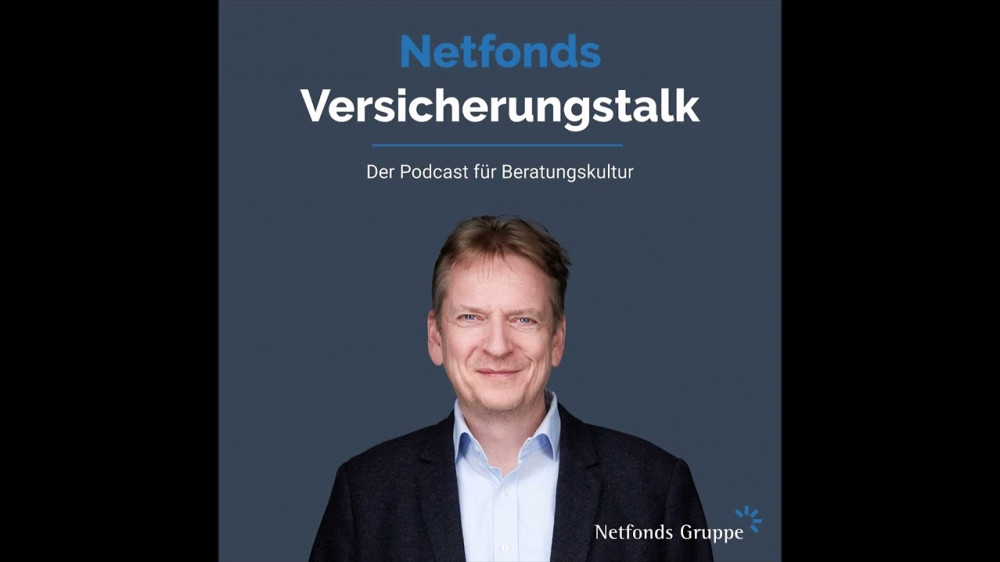
Green Politics and Economic Reality: Why Affordability Matters According to Netfonds' Chief Economist
Can societies afford ambitious environmental policies during economic uncertainty? This fundamental question lies at the heart of recent debates about sustainable development and green transitions. In an exclusive interview, Folker Hellmeyer, Chief Economist at Netfonds AG, presents a provocative perspective: "Green politics is a luxury that must be affordable." His comments challenge conventional approaches to environmental policy while offering pragmatic alternatives for balancing ecological goals with economic realities.
Who Is Folker Hellmeyer? A Voice of Economic Pragmatism
Before joining Netfonds AG, Folker Hellmeyer served as Chief Analyst at Bremer Landesbank and Helaba, bringing decades of financial market experience to his current role. His background in traditional banking and investment analysis informs his distinctive approach to economic policy—one that emphasizes practical feasibility alongside idealistic goals. In conversation with Oliver Bruns on the Netfonds podcast, Hellmeyer explores the delicate relationship between economic stability, political responsibility, and environmental sustainability.
The Affordability Argument: Why Green Policies Must Consider Economic Realities
Hellmeyer's central contention—that environmental policies must be economically viable—reflects growing concerns about implementation costs and social impacts. While supporting environmental goals in principle, he argues that policy design must account for:
- Household Budget Constraints: How energy transitions affect disposable income
- Business Competitiveness: The impact of regulatory costs on companies
- Implementation Timelines: Realistic pacing for technological and infrastructure changes
- Social Equity: Ensuring policies don't disproportionately burden lower-income groups
This perspective doesn't reject environmental action but calls for more nuanced approaches that consider both ecological benefits and economic costs.
ESG Investing: Hellmeyer's Support for Mandatory Queries with Personal Choice
Despite his cautious approach to green politics, Hellmeyer strongly supports mandatory ESG (Environmental, Social, and Governance) queries in financial services. His position represents an interesting middle ground: requiring disclosure and consideration of ESG factors while preserving individual choice.
"Everyone should decide what the right dose of ESG is for them," Hellmeyer states, advocating for transparency without prescription.
This approach aligns with growing trends in sustainable investing and responsible finance, where investors increasingly seek alignment between their portfolios and their values. For insurance and financial advisors, this means developing robust frameworks for discussing ESG preferences with clients while maintaining focus on financial objectives.
Practical Policy Proposals: The German Stock Pension System
Beyond environmental discussions, Hellmeyer addresses concrete financial industry topics, particularly Germany's proposed stock-based pension system (Aktienrente). While supporting the concept, he believes the implementation could be improved through more innovative approaches.
Hellmeyer's Bold Proposal: €5,000 Stock Investment for Every Newborn
The economist suggests a dramatic enhancement to the pension system: providing every child born in Germany with €5,000 specifically for stock market investment. This proposal aims to:
| Objective | Mechanism | Potential Benefit |
|---|---|---|
| Long-term wealth creation | Compound growth over decades | Enhanced retirement security |
| Financial education | Early exposure to capital markets | Improved financial literacy |
| Intergenerational equity | Equal starting point for all citizens | Reduced wealth inequality |
| Economic participation | Broad-based ownership of productive assets | Stronger social cohesion |
The Broader Context: German Economic Policy and Global Comparisons
Hellmeyer's critique extends beyond environmental policy to broader concerns about Germany's economic approach. He characterizes German policy as "too reactive"—responding to crises rather than proactively shaping favorable conditions. This criticism resonates particularly in comparisons with more agile economies and in the context of rapid technological change.
For insurance professionals and financial advisors, these observations highlight the importance of:
- Scenario Planning: Preparing clients for various policy and economic outcomes
- Regulatory Awareness: Staying informed about evolving policy landscapes
- Adaptive Strategies: Developing flexible approaches to changing conditions
- Client Education: Helping clients understand policy impacts on their finances
Implications for Insurance and Financial Services
Hellmeyer's perspectives carry specific relevance for insurance companies and financial advisors navigating the intersection of sustainability and profitability:
- Product Development: Creating insurance and investment products that balance ESG considerations with competitive returns
- Client Conversations: Facilitating discussions about sustainability preferences without compromising financial advice
- Risk Assessment: Evaluating how environmental policies might affect different client segments and industries
- Regulatory Compliance: Implementing mandatory ESG queries while maintaining service quality
- Long-term Planning: Incorporating policy uncertainty into financial projections and recommendations
Listen to the Full Discussion
For deeper insights into Hellmeyer's economic philosophy and specific policy proposals, listen to the complete interview on the Netfonds podcast:
- Apple Podcasts: [Link to episode]
- YouTube: [Link to episode]
- Spotify: [Link to episode]
The conversation explores not only environmental economics but also broader themes of responsibility, humility in policy-making, and the practical implementation of theoretical ideals.
Key Takeaway for Financial Professionals
The tension between environmental aspirations and economic realities represents both a challenge and an opportunity for insurance and financial services. By developing nuanced approaches that acknowledge both dimensions, professionals can better serve clients navigating complex decisions about sustainability, investment, and long-term security. Hellmeyer's call for pragmatism doesn't mean abandoning environmental goals but rather pursuing them through economically sustainable pathways that maintain broad public support.
Insurance companies and brokers face challenges in claims management with high backlogs, increasing claim frequencies, skilled labor shortages, and growing customer expectations. Manual processes are expensive and slow.