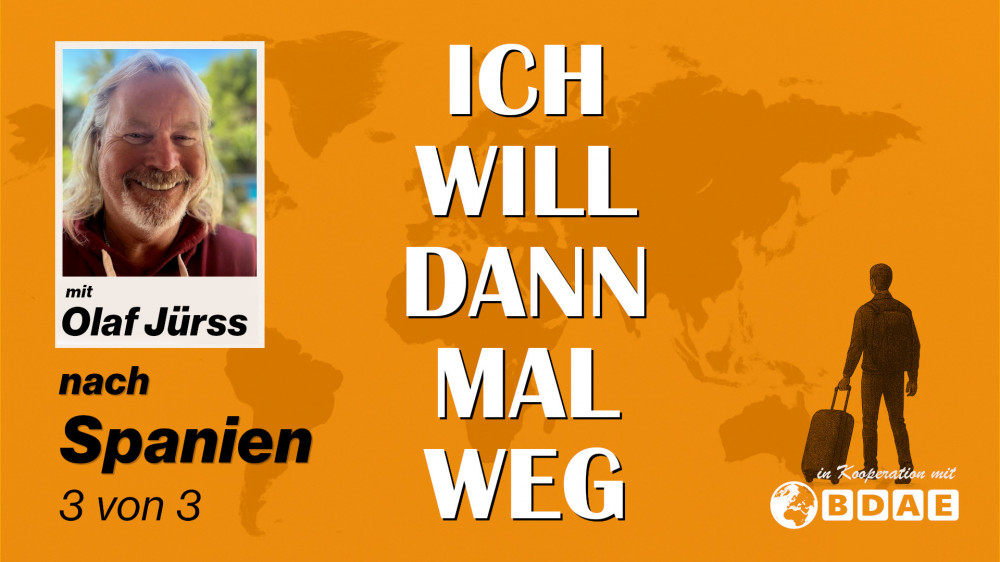
Building Your Insurance Practice Under the Spanish Sun
Dreaming of trading your office view for one in Spain while continuing your career as an insurance broker? In Parts 1 and 2 of our "I Want to Leave" series, we covered the general essentials of emigrating to Spain. Now, in Part 3, we get down to business—literally.
This installment is your professional blueprint. We once again speak with Olaf Jürss, an experienced insurance broker operating successfully in Mallorca, and Omer Dotou from the BDAE (Federal Association of German Employers Abroad), who has legally guided countless individuals and professionals through international relocation. Together, we dissect what specifically awaits you as a self-employed professional or insurance agent establishing a practice in Spain.
1. Registration & Licensing: The Legal Foundation
You cannot simply operate your German brokerage from a Spanish terrace. The Spanish insurance market is regulated by the Dirección General de Seguros y Fondos de Pensiones (DGSFP). To work legally, you must:
- Register as a Self-Employed Professional (Autónomo): This is your first legal step, making you subject to Spanish social security and tax systems.
- Obtain the Necessary License: Depending on your activities, you may need to register in the official registry of insurance intermediaries (Registro Especial de Mediadores de Seguros). Your existing German qualifications may be recognized, but the process is mandatory and involves submitting documentation and proof of professional liability insurance.
- Key Difference from the US: Unlike the US, where licensing is state-by-state, Spain has a national registry. However, the principle is similar: you must be formally authorized to advise and sell.
2. The Office Paradox: Digital Yet Physical
Spain is surprisingly digital in many administrative aspects (e.g., tax filings, digital signatures). However, for building trust and meeting certain legal or client expectations, a physical office often remains crucial.
- Why an Office Matters: Spanish clients, especially for complex products like life insurance or business insurance, often value a local, tangible presence. It signals permanence and professionalism.
- The Hybrid Solution: Many successful brokers use a professional registered address combined with a co-working space or a small private office for client meetings. This balances credibility with flexibility and cost.
3. Understanding the Spanish Insurance Landscape
Your product knowledge needs a geographic update. Spanish insurance policies differ significantly from their German counterparts.
| Insurance Line | Key Differences (Germany vs. Spain) | Implication for Your Practice |
|---|---|---|
| Health Insurance | Germany has a strong dual system (public GKV/private PKV). Spain has a robust public system (Sanidad Pública) complemented by private health insurance for faster access. Private policies are often simpler and cheaper than German PKV. | You are now advising on a different ecosystem. You must understand the public/private dynamic and the popular cuadro médico (network of doctors) system in Spanish private policies. |
| Homeowners/Contents Insurance | German policies can be highly detailed. Spanish Seguro de Hogar policies are common but may have different standard coverages (e.g., regarding water damage) and liability structures. | You must relearn standard coverages, exclusions, and common claim scenarios specific to Spanish properties (e.g., construction types, climate-related risks). |
| Automobile Insurance | Liability limits, no-claims bonus systems (bonus-malus), and policy conditions are governed by Spanish law and market norms. | Familiarize yourself with local insurers, their claim service reputation, and the typical coverage expectations of Spanish drivers. |
| Liability & Business Insurance | Legal frameworks differ. Spanish commercial insurance products must align with Spanish corporate and liability law. | Advising business clients requires understanding Spanish commercial law. Partnering with a local expert or law firm is highly advisable. |
4. Your Client Base: Expats, Locals, or Both?
Define your target market strategically:
- Serving the Expat Community: There is high demand among German, British, and other Northern European expats for bilingual brokers who can explain Spanish insurance in their language. Your existing communication skills are a major asset here.
- Serving the Local Spanish Market: This requires high language proficiency and deep integration into local business networks. It's more challenging but offers a larger, long-term market.
- The Hybrid Model: Many brokers start by serving the expat community to generate initial cash flow while gradually building the language skills and network to serve local clients.
5. Cultural & Professional Nuances
- Relationship-Based Business: The Spanish market often operates on trust and personal relationships more than purely online comparisons. Networking (hacer contactos) is essential.
- Pace and Communication: Business rhythms can differ. Be prepared for a different pace in decision-making and a more direct, yet relationship-oriented, communication style.
- Tax Obligations: As a self-employed autónomo, you will file quarterly VAT (IVA) returns and annual income tax (IRPF). Hiring a Spanish gestor (administrative/fiscal manager) is highly recommended to navigate this.
Your Action Plan for a Spanish Insurance Career
- Secure Your Legal Right to Work: Finalize your residency visa (NIE).
- Begin the Licensing Process: Contact the DGSFP or a legal advisor to understand the exact requirements for your brokerage activities.
- Register as Autónomo: This officially starts your business and tax obligations.
- Develop Your Product Knowledge: Invest time in studying Spanish insurance products, policy wordings, and major insurers.
- Establish Your Physical/Digital Presence: Secure a professional address and set up your online and offline office.
- Define Your Niche: Decide whether to focus on expats, locals, or a specific insurance line to concentrate your marketing efforts.
Moving your insurance brokerage to Spain is a significant professional reinvention. It requires not just a change of address but a commitment to understanding a new regulatory environment, different products, and a distinct business culture. The reward is the opportunity to build a fulfilling practice in one of the world's most desirable locations.
Ready for all the detailed answers on registration, digital tools, office setup, and policy comparisons? Listen to the full, in-depth conversation in Part 3 of our series, available now on Apple Podcasts and Spotify. Your Spanish professional chapter starts here.