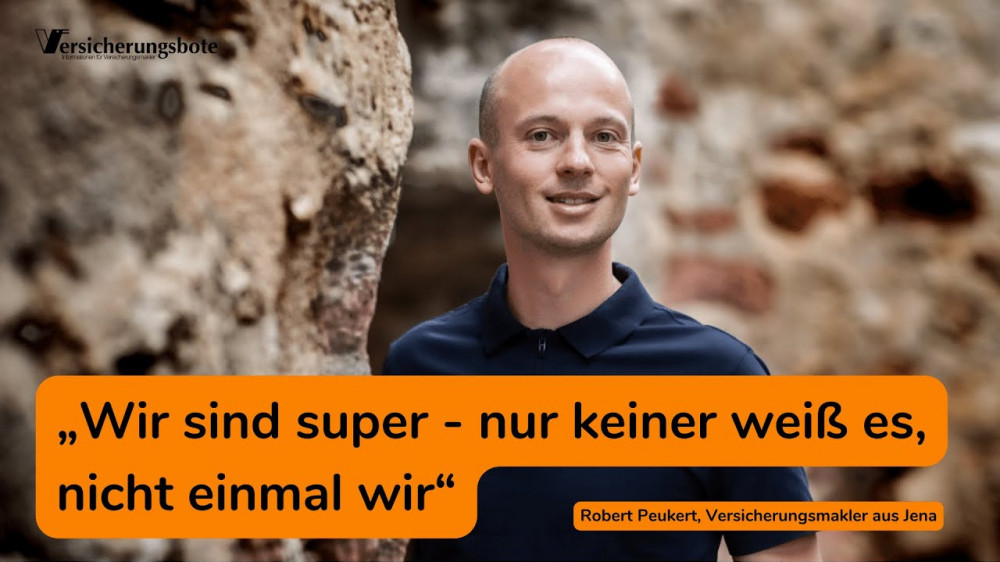
Robert Peukert on Rebuilding Trust: Why Every Good Deed Helps the Insurance Industry
How does the modern insurance broker look, think, and work? If the outdated stereotype is a pushy salesman in a dated suit, the reality is a tech-savvy, empathetic advisor focused on value and transparency. In a candid interview, Robert Peukert, known as 'Lieblingsmakler' (Favorite Broker), dismantles old clichés and outlines a powerful, optimistic vision for the future of insurance intermediaries. He argues that the path to a better industry reputation starts with individual action and collective self-awareness.
The Modern Insurance Advisor: A New Portrait
Question: If you had to film a commercial featuring a "modern" insurance broker, what would we see?
Robert Peukert: You would see an intellectual people-person, dressed in casual chic or casual modern style. He always has his tech with him: his laptop, microphone, and camera. He meets clients in his own office, online, or on-site as needed. The office isn't a classic one with white tables, white walls, and insurance ads; it's more like a warm, modern cafe. He communicates with his clients across all channels: phone, email, WhatsApp, social media... But his workday isn't just about consultations; he produces daily video and content to build his visibility.
Building Self-Confidence: Therapy for the Brokerage Profession
Question: Your most-read article this year is titled "We are great - but nobody knows it, not even us." It sounds like the brokerage profession needs a session on the therapist's couch. What would you say as a therapist to help it gain more self-confidence?
Robert Peukert: We simply need to become more aware of ourselves! That's already embedded in the word 'self-confidence.' The question is, how do we do that? One method is: we just write down our three daily successes. What success did we celebrate today, and what skills did we use to generate it? With this method, we first become aware of our good results. And I do exactly the same. The second thing is: we must be aware of our strengths and weaknesses. A strength is where we produce great results with minimal energy expenditure. Weaknesses are where we need a lot of energy and produce only minor results. That means if we focus on our strengths, strengthen our strengths, and this becomes conscious within the group—individually but also as an industry—then we will achieve greater self-confidence as a group.
Once we recognize our strengths and weaknesses, we must also acknowledge them. Emotionally accept them—that's important to simply recognize: Who are we, where do we want to go? As an industry, we must also recognize what is going well, what is not going well? As a third point, I'd like to add a Steffen Ritter quote: 'We must become much more aware of our professional image, our economic significance, and highlight that.'
This can be, for example, by simply posting a weekly or monthly success post where we explain the good we have done. It could be a settled claim, an uncovered coverage gap, or any other great customer experience in consultation. If we make that visible, we will become more robust and less fragile. By 'more robust,' I mean we focus on what is going well and not on the little that is going poorly.
Perhaps everyone knows this from themselves: at the end of the day, we dwell on the small things that didn't go so well. Everything else is forgotten. So we must adopt a differentiated perception to keep everything in view. If we pay attention to all this, things will skyrocket.
Combating the Trust Gap: Individual Action & Collective Change
Question: Surveys show many clients are very satisfied with their individual broker but have little trust in the brokerage profession overall. Almost 70% rate their own advisor as "very good" or "excellent." How effective can individual brokers be in fighting the industry's poor reputation? Many apparently advise with high quality and ensure customer satisfaction. Where do you hope for more self-criticism from the industry, or where do brokers or even the entire insurance industry shoot themselves in the foot?
Robert Peukert: Every good deed helps our industry to improve. And: nothing goes unseen. The next thing we can do is praise our colleagues. There's also a chapter on this in my book. If we work more with each other instead of against each other, we would present ourselves as a group much better.
The question is, why does it often happen that we badmouth others? We do that when we want to make ourselves bigger and thereby make the other smaller. That's called the superiority illusion, and you only do that when you yourself are not big enough. If we grow more personally, then such things will no longer happen. Because then no one feels the need to badmouth others anymore. Finally, we need transparency on all levels: in policy conditions, in policy costs, and also in processes. Insurers should present their processes more transparently to customers so that more trust can be restored there. But all of this is unfortunately not a sprint, but a marathon.
Reasons for Optimism: The Best Years Are Ahead
Question: You've written a guidebook titled "What a Financial Services Provider Needs to Know Today," with which you also write against the Damocles sword of a bad reputation. The subtitle: "Why the best years are still ahead of us." Can you briefly explain what makes you so optimistic? The obituaries for the industry are numerous.
Robert Peukert: Principally, I am a life optimist. That first. Secondly: The products are getting better, they are becoming more transparent, they are becoming cheaper. That means I also see the future very positively there. The third is: the new type of brokers are, in my world, more willing to learn, more qualified, and more value-oriented. The third point that makes me optimistic: In ten years, 50% of brokers will be retired, meaning only 50% will remain. So we no longer have a displacement market that forces us to work against each other, but a growth market. Freed-up market shares must be filled again.
And fourthly, technology: It will support us, it will allow us to work faster, more efficiently, more effectively. Of course, only if we receive technology as a friend, as a supporter, and not as an opponent. And if I now add everything up, I think we have a fantastic future ahead of us.
Insurers and brokers struggle in claims management with high backlogs, increasing claim frequencies, a shortage of skilled workers, and growing customer expectations. Manual processes are expensive and slow.