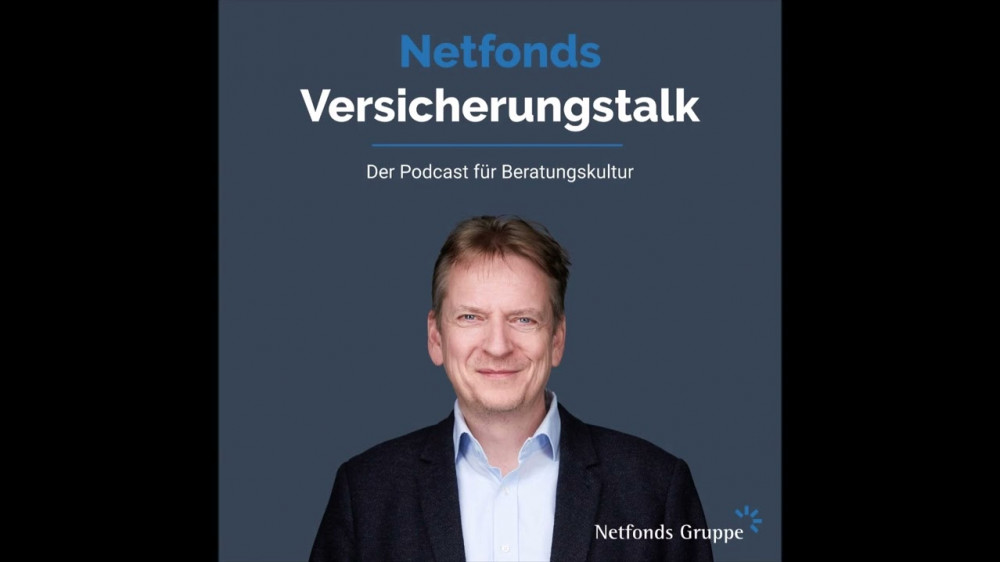
Why a Leading Actuary Advocates for Commission-Based Advice: Insights from Axel Kleinlein
If you're seeking financial advice or navigating insurance options, understanding how your advisor is compensated is crucial. The debate between fee-based and commission-based models is often heated, with strong opinions on both sides. In a thought-provoking interview on the Netfonds podcast, Axel Kleinlein—a respected actuary and former spokesperson for the German Insurance Consumer Association (BdV)—offers a nuanced and somewhat unexpected perspective. Moving from a past supporter of a commission ban, Kleinlein now emerges as a defender of the traditional Zillmer method for compensating insurance brokers and financial advisors. His insights cut through industry noise, providing clarity on the real value of professional guidance and the economic structures that support it. This analysis breaks down his key arguments and what they mean for you as you evaluate financial advisory services.
The Case for "Appropriate" Commissions: A Defense of the Zillmer Method
Kleinlein's most striking shift is his public support for commission-based compensation, specifically through the Zillmer method. This method, named after actuary August Zillmer, allows advisors to recoup the upfront costs of acquiring and servicing a client through commissions spread over the policy's early years.
- From Ban to Advocate: Kleinlein admits he was once a "fan" of a commission prohibition. His evolution stems from a practical recognition: "Good advice from good intermediaries costs money." A sustainable advisory profession requires a sustainable economic model.
- The "One Percent" Principle: He anchors his argument in the original intent of August Zillmer, who proposed a 1% Zillmer rate as "reasonable." Kleinlein states, "With that, one should be able to live... I am now even the strongest advocate." This highlights his call for moderation and transparency in compensation, not its abolition.
- Value Alignment: The core of his argument is that a fair, disclosed commission aligns the advisor's effort with compensation, funding the in-depth analysis and service required for proper retirement planning and risk management.
Beyond Compensation: Kleinlein's Broader Critique of the Insurance Landscape
Kleinlein's interview isn't just about commissions. He provides a sharp critique of broader industry practices that impact consumer outcomes.
| Area of Critique | Kleinlein's Perspective | Implication for Consumers |
|---|---|---|
| Product Complexity | He criticizes products that are "complex and overwhelmingly complicated," suggesting this complexity can be a barrier to good advice. | Seek advisors who can explain products in simple terms. Complexity often obscures costs and benefits. |
| Role of Artificial Intelligence (AI) | He is skeptical of AI's successful use in advisory, if products remain overly complex. AI cannot replace nuanced human judgment in navigating convoluted offerings. | While financial technology (FinTech) tools are useful, the human element of a trusted financial advisor remains irreplaceable for personalized strategy. |
| Insurer Incentives | He accuses insurers of exploiting conflicts of interest to bring "bad products to market," driven by internal sales targets rather than client need. | This underscores the importance of working with an independent broker or advisor who can critically compare products across multiple providers, not just one. |
| Strengthening Statutory Pensions | He outlines ideas for bolstering the public pension system, recognizing its role as a foundational layer of retirement security. | A robust public system reduces the pressure on individuals to make perfect private investment decisions, but private pension plans and life insurance remain essential supplements. |
Key Takeaways for Your Financial Planning Journey
What does Kleinlein's perspective mean for you as you seek financial guidance?
- Focus on Advisor Quality, Not Just Compensation Model: Whether an advisor is fee-based or commission-based, the critical factor is their expertise, transparency, and fiduciary commitment to your goals. Ask how they are paid and how that influences their recommendations.
- Demand Simplicity and Clarity: If a life insurance or investment product explanation feels intentionally confusing, it might be. A good advisor should make the benefits, costs, and risks understandable.
- Value the Intermediary's Role: Kleinlein affirms the essential task of intermediaries: to navigate a complex market on your behalf. A skilled insurance broker or financial consultant acts as your advocate, filtering out unsuitable products and identifying those that truly match your needs.
- Adopt a Holistic View: Effective financial planning considers all pillars: the statutory pension, private insurance, personal investments, and tax efficiency. Your advisor should help you integrate these pieces into a coherent strategy.
Conclusion: The Enduring Value of Human Expertise
Axel Kleinlein's interview reinforces a fundamental truth: in a world of complex products and potential conflicts of interest, the value of an ethical, knowledgeable, and fairly compensated professional is immense. His defense of a reasonable commission model is ultimately a defense of the advisory profession itself—a profession that takes the time to understand your unique situation, explain your options clearly, and build a plan that provides genuine security. As you make decisions about your financial future, prioritize finding an advisor who embodies these principles, regardless of their specific compensation structure.
Listen to the full Netfonds podcast episode with Axel Kleinlein for his complete thoughts on mortality tables, incentives, and the future of insurance advice.
Apple Podcasts: [Link to Apple Podcasts episode]
Spotify: [Link to Spotify episode]