Care at the Limit: How High-Tech and AI Could Save Billions in Long-Term Care
Everyone is talking about saving money in long-term care, but few offer solutions that don't hurt those who desperately need their insurance benefits. One powerful avenue has been largely ignored: high-tech solutions like AI (Artificial Intelligence) and care robotics can help contain soaring costs without cutting essential services. Globally, an entire industry is researching how machines can support an aging population. With advancements in AI and robotics, this sector has received a massive boost. For anyone navigating long-term care planning, whether under Germany's system or comparing it to US Medicare, Medicaid, and private long-term care insurance, understanding this technological shift is key to future financial security and quality care.
The Political Debate vs. The Technological Solution
In Berlin, the debate has centered on potentially eliminating care level 1 (Pflegegrad 1), which provides at least €131 monthly to those with "minor limitations in independence." The RWI Leibniz Institute estimates this could save €1.8 billion annually. However, this is just a fraction of the €63 billion paid out in long-term care benefits each year in Germany. Costs have more than quadrupled since 2000, and Health Minister Nina Warken (CDU) warns of a looming multi-billion euro deficit.
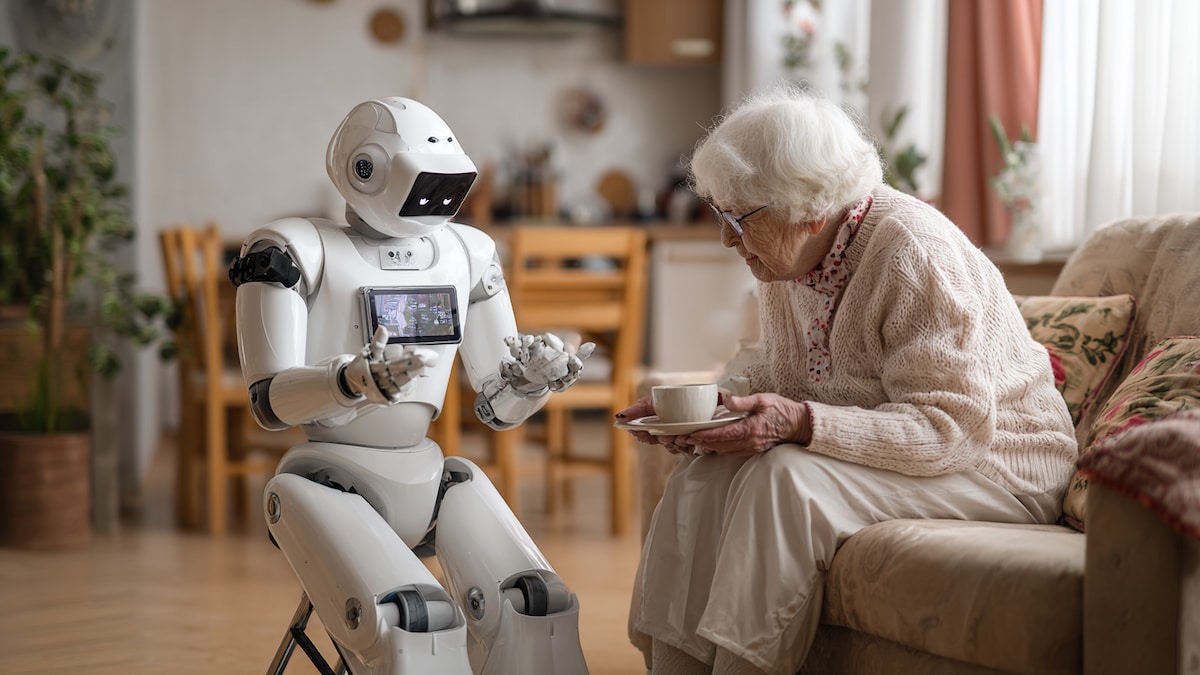
Yet, this contentious debate could be avoided. The financial hole could be closed, and constantly rising expenditures could be curbed if care providers consistently leveraged available technology. AI and care robots can handle documentation, patient records, fetch items, provide reminders, and detect fall risks before an accident happens. This saves time, saves money, and—in an ideal scenario—frees up caregivers for what truly matters: human connection and conversation.
Measurable Benefits: Telecare and Increased Productivity
The benefits are quantifiable. A recent study commissioned by the German Health Ministry found that telecare—digital visits and alarm systems—reduces travel and response times by 29% to 58%. The authors concluded: "A solution to overcome the shortage of nursing staff lies in increasing labor productivity through the use of technology." They identified five key areas for technological intervention:
- Electronic data capture
- Technical assistance systems
- Wound management
- Robotics
- Consultation and advice
The Bertelsmann Foundation refers to this integrated approach as "Care 4.0" and sees "great potential for relief."
Innovations in Practice: From Social Robots to Remote Avatars
The Social Robot "Navel"
Organizations like the Evangelische Heimstiftung are testing solutions like the social robot "Navel," which uses AI and ChatGPT to interact with seniors, hold conversations, and remember details. Costing around €28,000—about half the annual cost of an additional caregiver—Navel works around the clock. This pilot project aims to explore the practical applications and limitations of social robotics in care.
Remote-Controlled "Robodies"
Munich-based startup Devanthro is pioneering "Robodies"—remotely controlled avatars. A caregiver can operate one from a distance to help with grasping objects, opening cabinets, handing over items, and conversing with the person at home. This acts as a force multiplier, allowing one professional to assist multiple seniors without being physically present.
AI for Clinical Documentation
The Fraunhofer Institute's Elmtex project employs AI to process clinical documentation. The goal is a cost-effective, data-protection-compliant solution that allows clinics to run their own AI applications onsite. By autonomously recording findings and treatment progress during patient conversations, this technology could save caregivers and doctors over 10% of their daily work time currently spent on administrative tasks.
A Glimpse at the US: Technology Combating Loneliness
A look at the United States shows the potential of social technology. New York State provides the companion robot ElliQ to isolated seniors. A survey by the state health authority found it reduced feelings of loneliness by 95%. Users interact with the system over 30 times a day. This initiative highlights a parallel trend in US senior care, where technology supplements human interaction, similar to how Medicare Advantage plans are increasingly incorporating telehealth and remote monitoring benefits.
The Financial Impact: Potential for Massive Savings
Globally, experts anticipate significant savings from AI, especially in healthcare. Consultants at McKinsey estimate that broadly implementing existing AI solutions could save the US healthcare system up to $360 billion annually. They project a 13-25% reduction in administrative costs and a 5-11% decrease in medical costs for insurers.
While a precise total for Germany's long-term care sector is not yet available, the 29-58% efficiency gains from telecare suggest the direction: less downtime, less duplicate documentation, fewer preventable accidents. This could easily translate to savings in the billions of euros domestically, all without compromising the well-being of care recipients.
The Ethical Dimension: Technology as a Tool, Not a Replacement
The crucial question remains one of ethics. The German Ethics Council stated in 2020 that robots can help, but "touch cannot be replaced with plastic." The well-being of the care recipient must remain central. MIT researcher Sherry Turkle warns against confusing machines with genuine empathy, noting that social robots "seem empathetic," but this closeness is simulated. However, moral theologian Josef Römelt from Erfurt also sees a positive aspect: "Some seek anonymity as protection of their own intimacy... and yet there are situations where immediate conversation with a person whose eyes you can look into, and sensitive touch by another, are indispensable."
Key Takeaways for Your Care Planning
- Cost-Saving Potential: AI and robotics offer a path to significant systemic savings (potentially billions) by increasing caregiver productivity and reducing administrative overhead, not by cutting benefits.
- Complementary Role: Technology is best viewed as a tool to augment human care, handling repetitive tasks and monitoring, thereby freeing up time for essential personal interaction.
- Future-Proofing: Whether in Germany or the US, staying informed about assistive technology and telehealth options covered by insurance (like some Medicare benefits) is vital for creating a sustainable, high-quality long-term care plan.
The future of sustainable, affordable elder care may depend not on cutting support, but on smartly integrating the technological tools already at our disposal.