German Private Health Insurance Stress Test 2024: Rating Reveals Financial Winners & Losers
When choosing private health insurance, whether in Germany or abroad, the financial stability of your insurer is paramount. It determines their ability to pay future claims, manage rising healthcare costs, and keep premiums sustainable. The latest MAP-Report 940 delivers a crucial balance sheet rating for German Private Health Insurance (PKV) companies, analyzing their economic resilience from 2020 to 2024. For the first time, a new leader tops the ranking. This article breaks down the winners, losers, and key takeaways, providing essential context for anyone evaluating health insurance providers and drawing comparisons to financial stability assessments in the US health insurance market.
The Systemic Challenge: Rising Costs and the Need for Efficiency
The German PKV system, much like its public counterpart and health systems globally, faces intense pressure from rising medical expenses, demographic aging, and costly new therapies. In the report's preface, editor-in-chief Reinhard Klages highlights a systemic issue: "Rising social expenditures affect everyone. They make labor more expensive, weaken competitiveness, and reduce purchasing power." He argues the problem isn't just demographics but systemic inefficiencies—overpriced medications, incorrect diagnoses, duplicate billing—costing the system billions and driving up premiums.
The proposed solution lies in robust digital controls and AI-powered audits to combat fraud and streamline administration. For PKV insurers, leveraging technology isn't just an option; it's a pathway to maintaining credibility and long-term premium stability.
How the PKV Balance Sheet Rating Works: The MAP-Report Methodology
The MAP-Report 940 evaluates private health insurers based on nine core balance sheet ratios from 2020-2024, smoothing out short-term fluctuations to reveal true economic stability. Two new growth metrics were added in this edition, though their combined weight remains below 3.5%.
The nine core financial ratios analyzed include:
- Net Return on Investments
- Solvency Ratio (comparable to US risk-based capital ratios)
- Cost Ratios (Administration & Acquisition)
- Reserve Strength
- Premium Stability
- Capital Buffer Adequacy
Companies are scored on a points system (up to 300), with critical metrics like net return and solvency weighted more heavily. The final rating translates into grades: "Excellent" (mmm+), "Very Good" (mmm), "Good" (mm), "Satisfactory" (m), and "Sufficient" (m-).
The 2024 Ranking: A New Champion and a Tight Race at the Top
This year's report sees a leadership change. Universa claims the top spot for the first time with 276.5 points (92.2%), dethroning the previous leader.
LVM follows closely in second place with 273.5 points (91.2%).
Alte Oldenburger rounds out the top three with 272.5 points (90.8%).
The narrow four-point gap between them underscores the intense competition among the elite. Signal Iduna also secures an "Excellent" (mmm+) rating with 264.5 points (88.2%).
The Broader Landscape: Stability with Growing Polarization
Ten insurers achieved the top two rating categories ("Excellent" and "Very Good"), indicating robust stability across a significant market segment. This group includes names like VGH Provinzial, Inter, Hallesche, Allianz, R+V, and Landeskrankenhilfe.
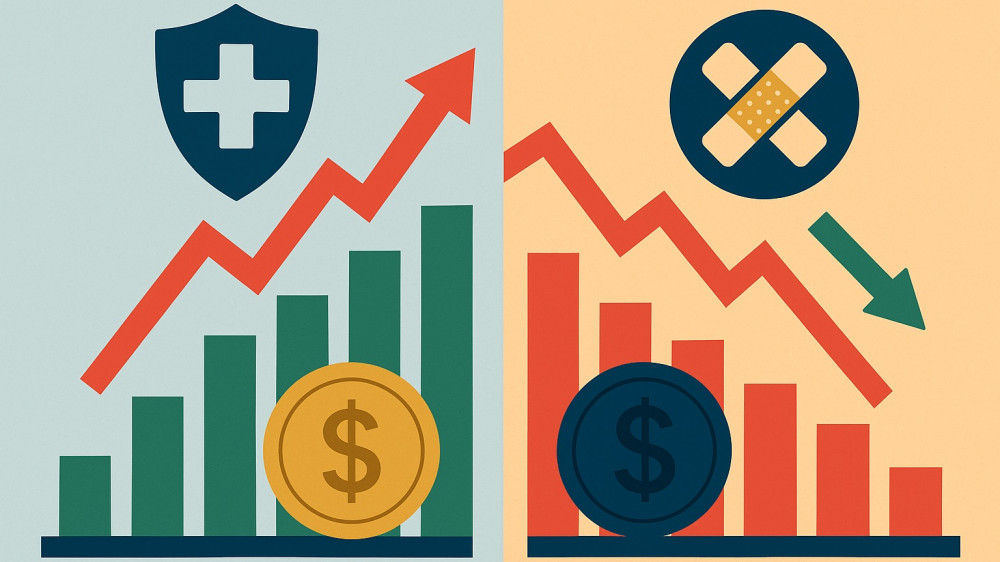
However, the report also reveals a widening gap. The number of insurers receiving the lowest grade ("Sufficient" or m-) has doubled from two to four. The companies at the bottom of the 2024 ranking are:
- Concordia (53.3%)
- Huk-Coburg (53.0%)
- VRK (48.7%)
- Nürnberger (45.0%)
While these companies meet regulatory minimums, they possess significantly thinner financial reserves and less maneuvering room to handle future cost shocks—a clear warning sign for policyholders.
German PKV Ratings vs. US Health Insurer Financial Strength
For American readers, this rating serves a similar purpose to the Financial Strength Ratings issued by agencies like AM Best, Standard & Poor's, or Moody's for US health insurers. These US ratings (e.g., A++, AA) also assess an insurer's ability to meet ongoing policyholder obligations. The German MAP rating, focusing on specific balance sheet ratios over a five-year period, provides a specialized, granular look at PKV stability, much like how AM Best analyzes the US health insurance sector. In both markets, a high rating is a critical indicator of security for anyone purchasing individual or family health insurance.
Conclusion: Why Insurer Financial Health Matters to You
The 2024 balance sheet ratings highlight a PKV market where top-tier insurers demonstrate strong resilience, but a tail of weaker performers faces growing pressure. For consumers, an insurer's financial grade is not just a number—it's a proxy for the security of your coverage and the likelihood of future premium shocks. When shopping for private health insurance, prioritizing insurers with high financial strength ratings ("Excellent" or "Very Good") can be as important as comparing benefits. It's a key step in ensuring your chosen provider has the economic fortitude to be there when you need it most.
Data Source: The analysis is based on the MAP-Report 940 "Balance Sheet Rating Private Krankenversicherung 2024" by Franke and Bornberg. The report offers a comprehensive overview of the industry's economic stability and can be ordered via the rating experts' website.