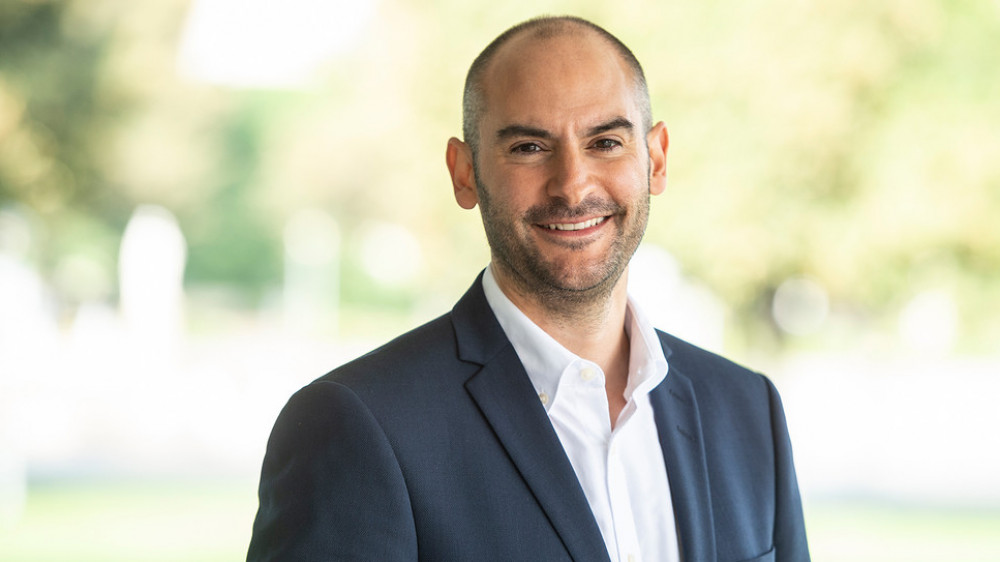
Rethinking Retirement: A German Minister's Push for a Stock Market Culture
Danyal Bayaz, Finance Minister of Baden-Württemberg, criticizes the lack of German engagement in the stock market. "We have a stock market culture that cannot satisfy us," said the Green Party politician to the German Press Agency (dpa). To secure themselves in an aging society, many more people need to privately invest their money in securities.
Addressing a Cultural Aversion to Stocks
p>Germans primarily see negative factors like short-term losses, said the state minister in the cabinet of Winfried Kretschmann. In the long term, however, the positive aspects with gains and wealth accumulation outweigh. "Many other countries do better with private capital investment and are more sovereign here," said the Green politician. Bayaz, after studying communication sciences with a focus on banking, himself earned a doctorate on private equity.The State of Shareholding in Germany
The number of shareholders has been rising for years. Nevertheless, in 2022, less than one in five Germans aged 14 and over (18.3%) or 12.9 million people owned corresponding investments, as figures from the German Stock Institute show. The number of shareholders varies significantly from state to state. Baden-Württemberg led with 24.5%, while in Mecklenburg-Vorpommern, only 7.9% of the population invests in the stock market. Generally, there is a strong west-east divide: in the eastern German states, with the exception of Saxony (18.3%), the number of shareholders is particularly low.
Conservative Investment Habits and a Personal Example
Germans are also rather conservative in their stock market investment: 7.6 million people hold only funds or ETFs in their portfolio, as reported by the German Stock Institute. 2.9 million people combine funds and ETFs with individual stocks, but only 2.4 million invest exclusively in stocks. Bayaz also reports that he focuses on sustainable and passively managed investments: he holds only ETFs. He looks at his portfolio rather infrequently. "I want to sleep well at night. I check every few months how the market is running. Especially in turbulent times like currently, you need a long breath," said the 39-year-old. He does not advise investing in individual stocks due to the higher risk.
A Policy Proposal: The "Germany Fund" for Retirement
In the interview with the press agency, Bayaz calls for a Germany Fund or a "Germany Pension" for private retirement provision. The Riester pension was fundamentally the right idea, but he often observes complicated and expensive products with hidden fees. What is required is a public, broadly diversified, and passively managed basic product. "In addition to the statutory pension, this would be a good way to make private retirement provision simpler, cheaper, and accessible to a broader section of the population," says Bayaz.
Analyzing the Proposal: A "Germany Fund" as a Retirement Solution
The concept of a state-sponsored, low-cost passive fund is not entirely new but gains relevance in the context of the growing pension gap (Rentenlücke). Such a fund could operate similarly to existing sovereign wealth funds or the proposed European "Pillar 3" pension products, with key features potentially including:
- Automatic Enrollment: Opt-out system for employees to increase participation rates.
- Ultra-Low Costs: Leveraging state scale to achieve management fees far below commercial products.
- Simple, Transparent Design: Investing in a broad, market-cap-weighted index of German or European stocks and bonds.
- Tax Efficiency: Clear, long-term tax treatment to encourage holding until retirement.
- Portability: The account follows the individual, not the employer.
This approach aims to bypass the complexity and high costs that have plagued some existing subsidized private pension plans like the Riester-Rente, where high administrative and distribution costs have often eroded returns for savers.
The Broader Challenge: Financial Literacy and Trust
Minister Bayaz's comments touch on deeper issues beyond product design:
- Historical Trauma: Germany's historical experiences with hyperinflation and war have fostered a deep-seated preference for tangible assets (like real estate) or "safe" savings accounts over equities.
- Financial Education Gap: A lack of foundational financial knowledge in the population about concepts like risk, return, diversification, and long-term investing.
- System Complexity: The existing private pension landscape (Riester, Rürup, betriebliche Altersvorsorge) is fragmented and difficult for the average citizen to navigate.
- Rebuilding Trust: Past mis-selling scandals and the poor performance of some insurance-linked savings products have damaged trust in financial intermediaries.
Pathways Forward: Building a Sustainable Retirement System
For Germany to strengthen its multi-pillar pension system, a multi-pronged approach is likely necessary:
- Product Innovation: Developing simple, low-cost default options like the proposed Germany Fund.
- Education Campaigns: Nationwide, neutral financial education initiatives, potentially starting in schools.
- Regulatory Support: Ensuring regulations favor transparent, cost-efficient products and protect consumers from unsuitable, high-fee offerings.
- Fiscal Incentives: Re-evaluating subsidy programs (like Riester) to ensure they effectively channel savings into productive, growth-oriented investments rather than being absorbed by costs.
- Promoting Digital Access: Leveraging fintech and neobrokers to lower the barrier to entry for first-time investors.
Minister Bayaz's intervention highlights a growing consensus among policymakers that relying solely on the state pension is no longer viable. Fostering a healthier stock market culture and providing accessible, efficient investment vehicles are critical steps toward ensuring future retirees can maintain their standard of living, turning the demographic challenge into an opportunity for broader capital ownership and economic participation.