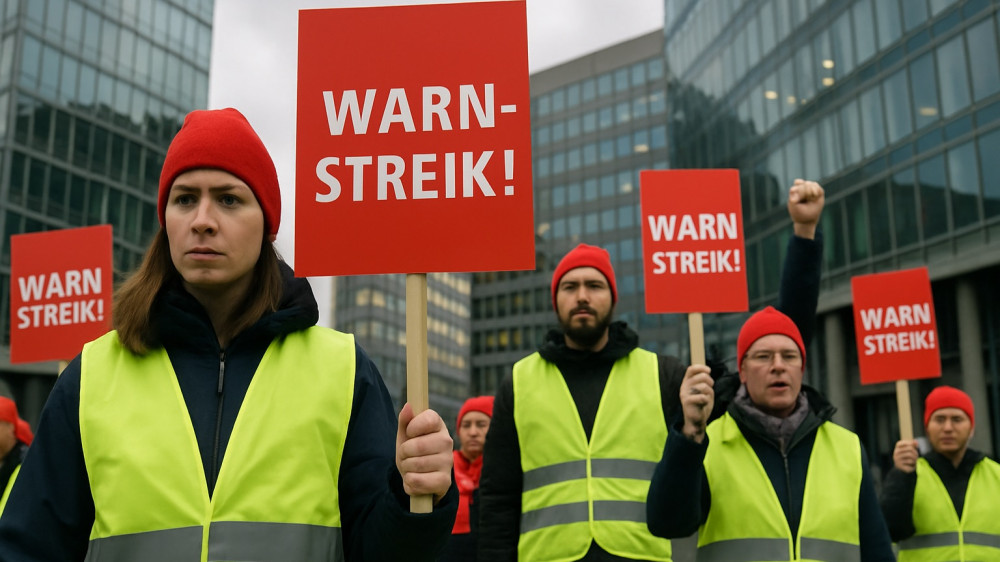
Insurance Sector on Strike: The Battle for Fair Wages in a Booming Industry
If you have a policy with a major German insurer, you may soon experience service delays. The private insurance industry is bracing for significant disruption as the trade union ver.di has called for nationwide warning strikes on June 26th. This escalation comes after a third round of fruitless wage negotiations with the employers' association of private insurance companies (AGV) reached a deadlock at the end of May. Approximately 180,000 back-office employees across key cities—including Berlin, Frankfurt, Hamburg, Munich, Cologne, and Stuttgart—are set to walk off the job.
This labor dispute highlights a growing tension not unique to Germany: a highly profitable financial services sector grappling with demands from its workforce for a fair share of success. While the context is German insurance (encompassing providers of PKV private health insurance, property, and life coverage), the dynamic mirrors discussions in other strong markets, such as the U.S. health insurance and Medicare Advantage sectors, where record earnings often coincide with debates over employee compensation and consumer costs.
Why Are Insurance Employees Striking?
The core of the conflict is a perceived gap between corporate prosperity and staff compensation. Ver.di negotiator Martina Grundler states plainly: "In a economically strong industry with record profits and rising dividends, the employees who are responsible for these successes have once again been presented with an absolutely unacceptable offer."
The union's key demands are:
- A 12% wage increase over a 12-month contract term.
- An increase in apprenticeship pay by 250 euros monthly.
The union argues that despite the industry's boom, employees continue to suffer real wage losses due to inflation, effectively eroding their purchasing power even with nominal raises.
The Employer's Offer: A Closer Look
In the latest negotiation round, the employer side (AGV) presented a revised offer, moving from their initial position:
| Offer Component | Initial AGV Offer | Revised AGV Offer (Round 3) |
|---|---|---|
| Contract Duration | 35 months | 28 months |
| 1st Increase (Effective) | 3.6% (Sept. 2025) | 4.8% (Aug. 2025) |
| 2nd Increase (Effective) | Proposed | 3.3% (Sept. 2026) |
| 3rd Increase (Effective) | Proposed | Removed from offer |
| Total Nominal Increase | 8.63% over 35 mos | 8.29% over 28 mos |
While the employers shortened the term and front-loaded a larger initial raise, the union rejected it. Ver.di calculates that even with this offer, real incomes in 2027 would still be about 4% below their 2020 level, after adjusting for inflation. Grundler emphasized: "The employees have clearly earned more than permanent real wage losses. We won't let this happen to us."
What the Strikes Mean for Insurance Customers
As a policyholder, you should be prepared for potential service impacts on and around June 26th. While critical claims processing and emergency services will have contingency plans, you might experience:
- Longer wait times on customer service phone lines and for email responses.
- Delays in processing new policy applications, endorsements, or non-urgent claims.
- Postponement of some administrative and back-office functions.
It's a timely reminder of the human infrastructure behind your insurance policy—the agents, underwriters, and service staff who manage your coverage, whether it's for your German household, your private health insurance (PKV), or, in a U.S. analogy, your Medicare plan or auto insurance.
The Bigger Picture: Profitability vs. Pay
This strike brings a fundamental business question to the forefront: How should profits be shared in a successful industry? Ver.di's campaign frames it as a matter of basic fairness in a sector reporting strong financial results. The outcome of this dispute could set a precedent for wage negotiations in other lucrative segments of the German and European financial services landscape.
Key Takeaways for Consumers and the Industry
- Service Interruption is Likely: Plan ahead for any non-urgent insurance needs in late June.
- Understand the Stakes: This is more than a wage dispute; it's about inflation protection and equitable profit-sharing in a essential service industry.
- Watch for Resolutions: The pressure from nationwide strikes may force a return to the negotiating table with a improved offer. A prolonged conflict, however, could lead to more sustained service issues.
- A Global Theme: The tension between high corporate profits in insurance/healthcare and employee compensation is a relevant topic in many markets, including the United States.
The coming weeks will be critical. The nationwide strike action on June 26th is a powerful signal from the workforce. Whether it leads to a breakthrough or a protracted standoff will depend on the next moves from both the union and the employer association.