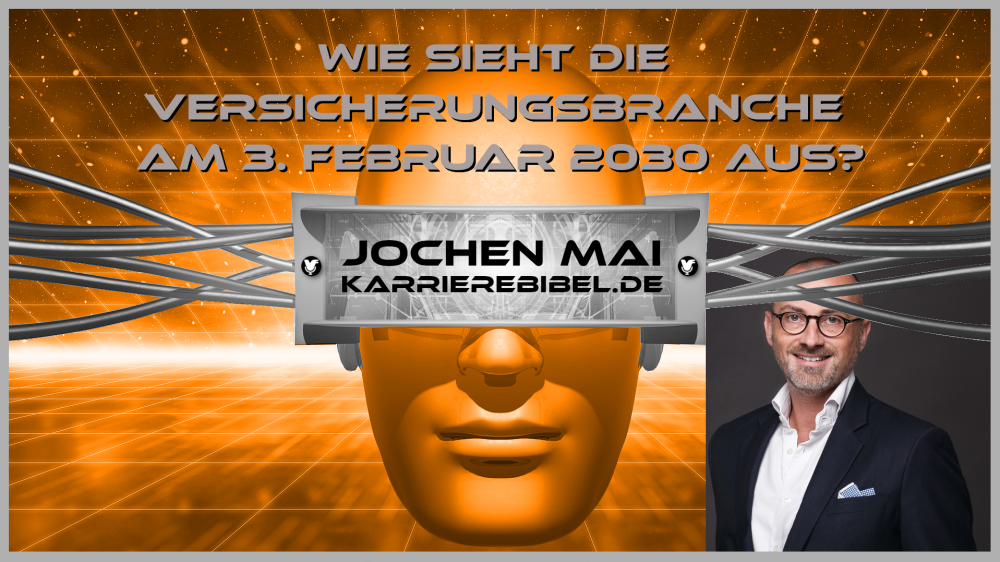
The Insurance Job Market in 2030: Trends, Skills, and the Future of Work
As part of the project "What will the insurance industry look like on February 3, 2030?" we conducted an interview with Jochen Mai, founder of karrierebibel.de, bestselling author, and one of THE experts on the future of the job market and applicants.
Among other things, we discussed the following topics:
- The impact of digital transformation and Artificial Intelligence (AI) on insurance roles.
- The evolution of employer branding and the role of corporate influencers.
- Essential future skills for insurance professionals.
- Changes in recruitment and the applicant experience.
- The balance between automation and the human touch in customer service.
Regarding corporate influencers and employer branding, Jochen Mai explained:
"What is shown and told to us by people on Instagram or TikTok, like 'Wow, I'm super successful here. 1 million by Thursday. You can do it too.' These are all illusory worlds. And of course, it's not much different with corporate influencers because they serve a purpose. And I believe that as this trend increases, we will eventually learn not to believe everything, and thus the influence of corporate influencers will also decline again."
You can find the entire conversation here. Listen to it. It's worth it!
Key Predictions for the 2030 Insurance Workforce
By 2030, the insurance industry jobs landscape will be fundamentally reshaped by technology and changing expectations. Here’s what you can expect:
1. The Rise of Hybrid Roles and New Specializations
Traditional roles like underwriters and claims adjusters will evolve. You'll see more positions like Data Analyst, Cyber Risk Modeler, UX Designer for Insurance Apps, and Sustainability Risk Officer. The core insurance knowledge will remain vital, but it will be fused with tech fluency, data literacy, and strategic advisory skills.
2. AI as a Collaborator, Not Just a Replacement
Artificial Intelligence in insurance will automate repetitive tasks (data entry, initial claims triage), freeing up human professionals for complex risk assessment, empathetic customer interactions, and strategic consulting. The most valuable employees will be those who can effectively manage, interpret, and act on AI-driven insights.
3. Skills Over Degrees, Adaptability Over Tenure
While formal education remains important, demonstrated skills in data analysis, digital tools, and agile project management will be highly prized. The ability to continuously learn and adapt will be the most critical career insurance policy. Companies will invest heavily in upskilling and reskilling their existing workforce.
4. Authenticity in Employer Branding
As Jochen Mai suggests, glossy, inauthentic employer branding will lose its impact. To attract top talent, especially from younger generations, insurers will need to demonstrate genuine company culture, purpose, work-life balance, and opportunities for meaningful impact. Transparency about the use of technology and career development paths will be key.
5. The Enduring Value of the Human Touch
Despite advanced automation, the need for trust, empathy, and complex problem-solving in situations like major claims, bespoke commercial policies, or financial planning will ensure a strong demand for skilled human advisors. The profession will shift from transactional service to trusted partnership.
Preparing for this future means starting now—whether you're an employer building a future-ready team or a professional future-proofing your insurance career.