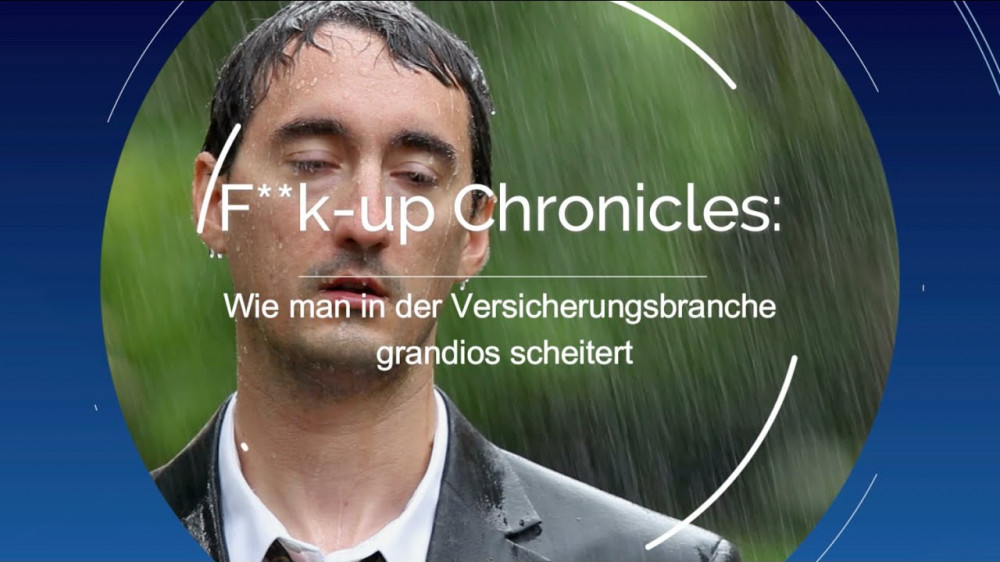
Insurance Broker Confession: "We Are an Industry of Cowards"
When you think of the insurance and financial advice industry, images of success, luxury cars, and Rolex watches might come to mind. But behind this polished facade lies a reality many professionals are afraid to discuss: failure. In a remarkably candid interview, veteran insurance broker and entrepreneur Tino Scraback pulls back the curtain, arguing that the industry is "full of cowards" who avoid accountability. His story of costly mistakes, legal battles, and hard-won lessons offers invaluable insights for anyone seeking honest financial advice and underscores the importance of resilience in financial planning.
The High Cost of Chasing "Hot" Investments
Scraback's first major failure came early in his career. As a young broker in his mid-20s, he was drawn to a seemingly lucrative investment opportunity promising high monthly returns. Like many in the industry, he was swayed by a compelling story and attractive commissions, venturing outside his core expertise of insurance into unregulated investment territory.
The Result: The scheme collapsed, the operator vanished, and Scraback was left responsible for significant losses suffered by clients, friends, and family. He faced a criminal investigation for selling an unlicensed security. This disaster taught him a brutal lesson about risk management and the boundaries of his professional role.
Key Lessons from a Costly Mistake
| The Mistake | The Immediate Consequence | The Lifelong Lesson |
|---|---|---|
| Venturing into unregulated, complex investments outside his licensed expertise. | Client losses, legal scrutiny, damaged reputation, and personal financial liability. | Stick to your core competency. He now exclusively focuses on insurance and straightforward products like mortgages/savings, avoiding speculative areas like crypto or gray-market investments. |
| Failing to conduct proper due diligence on the product and its promoter. | Being held accountable for mis-selling a product that was essentially a fraud. | If it sounds too good to be true, it is. True financial security for clients is built on transparent, regulated products, not get-rich-quick schemes. |
| Not fully understanding the legal and regulatory boundaries of his license. | Facing potential loss of his professional license and criminal charges. | Know the rules. Professional boundaries exist to protect both the advisor and the client. Operating within them is non-negotiable for a sustainable practice. |
Scraback's path to recovery involved taking full responsibility. He spent years personally reimbursing affected clients, which helped salvage some relationships and his professional integrity. This experience forged his philosophy: "We have to stand by our actions."
The "Industry of Cowards": A Critique of Fear and Blame
Scraback's harshest criticism is reserved for the industry's culture of fear and deflection. He observes that many brokers live in terror of lawsuits and errors, yet actual major liability cases are rare for those who do their job diligently.
- The Fear is Overblown: With proper documentation and a commitment to doing right by the client, the perceived legal boogeyman is largely a myth. His own firm, managing 50,000 clients, deals with only a handful of minor legal inquiries per year.
- The Cowardice is in Avoiding Accountability: The real problem, he argues, is an unwillingness to admit mistakes. "Successful people... ask themselves: 'What did I do wrong?'" He contrasts this with a common tendency to blame others—clients, regulators, or former partners—for business failures.
- The American vs. German Mentality: He points to a cultural difference, noting that American entrepreneurs are often more open about failure as a learning step, while many in his field retreat, complain, and assign blame.
What This Means for You: Choosing a Financial Advisor
Scraback's raw honesty provides a framework for evaluating your own financial advisor or insurance broker:
- Seek Transparency, Not Perfection: An advisor who acknowledges the complexities and potential pitfalls of financial planning is more trustworthy than one who projects infallibility.
- Beware of Scope Creep: Is your insurance broker suddenly pushing a speculative investment or complex annuity? A good advisor knows their limits. Specialization in core areas like life insurance, disability insurance, and retirement planning is a strength.
- Evaluate Their Philosophy on Risk: Do they promote "can't-miss" opportunities, or do they emphasize balanced, long-term risk management? The latter approach prioritizes your financial security over their commission.
- Look for Professional Resilience: An advisor who has navigated challenges and learned from them often possesses deeper wisdom and a stronger commitment to client care.
True financial security is built on a foundation of trust and expertise. Tino Scraback's journey from a devastating failure to a respected broker underscores that the most valuable professionals are not those who never fail, but those who have the courage to face their mistakes, learn from them, and use those lessons to serve their clients with greater integrity and wisdom. In an industry often shrouded in pretense, this honesty is the ultimate mark of a reliable partner for your long-term financial planning.