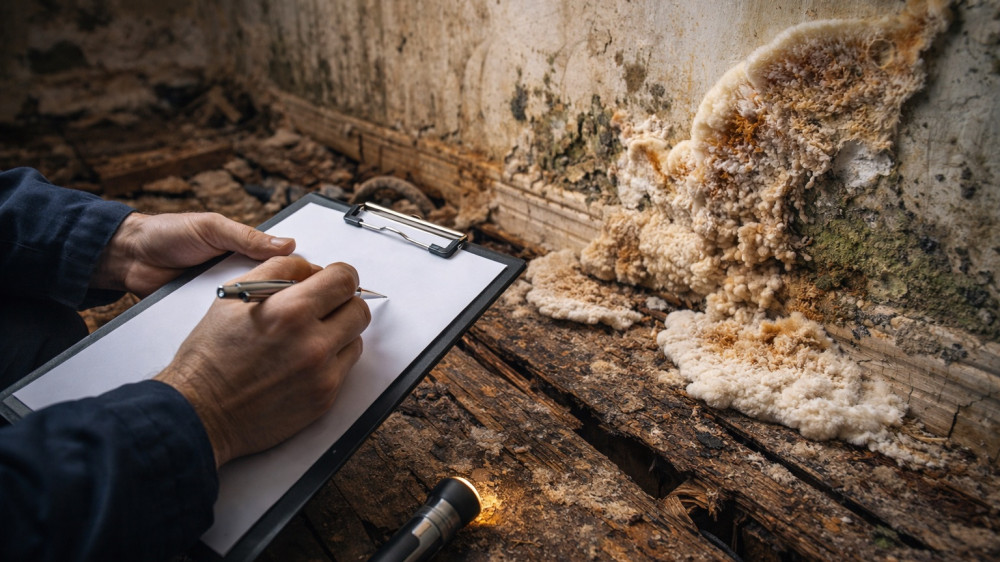
You may have heard about the long-standing dispute over the dry rot exclusion in homeowners insurance. Now, a new ruling has clarified the situation: insurers can continue to limit coverage to isolated moisture damage, meaning dry rot claims can be excluded. This decision by the Higher Regional Court (OLG) of Cologne confirms that the dry rot clause remains valid, potentially leaving you with zero coverage for such damages even if they result from a covered event like a water pipe leak.
Advertisement
The case began with significant damage caused by white pore fungus (a type of dry rot) following a water damage incident. The policyholder demanded full coverage, but the insurer denied the claim based on the dry rot exclusion. While lower courts partially ruled in favor of the policyholder, the Federal Court of Justice (BGH) stepped in and sent the case back for review, questioning whether the exclusion clause was valid under standard contract terms. The BGH emphasized that the clause must not undermine the purpose of the insurance contract—essentially, it shouldn't make the policy pointless.
For you, this means the key question is whether dry rot damage is a typical or inevitable consequence of water leaks. The OLG Cologne commissioned an expert report to answer this. The conclusion: dry rot is not a typical or inevitable result of water pipe leaks. Therefore, the exclusion does not jeopardize the contract's purpose. The court clarified that the term "dry rot" broadly covers all types of wood-decaying fungi, including white pore fungus. As long as such damage isn't a regular occurrence, the exclusion remains valid.
In practical terms, this means the exclusion would only be invalid if dry rot were a frequent, inevitable, and characteristic consequence of water leaks in nearly all residential buildings in Germany. Since that's not the case, the OLG Cologne upheld the exclusion. For you as a policyholder, this means that in the specific case, the homeowner only received compensation for pure moisture damage unrelated to dry rot—far less than originally claimed. Any additional claims, such as for advisory errors, were also dismissed, especially since the policy was arranged through an insurance broker.
This ruling has significant implications for you if you own a property, especially one with wooden structures. Even if your policy covers water damage, the costs of repairing dry rot—including opening up walls, removal, drying, and restoration—may remain largely outside your coverage. Insurance advisors should explicitly explain and document the dry rot exclusion, particularly for homes with high wood content. As attorney Tobias Strübing, a specialist in insurance law, notes: "With dry rot, the policy can effectively become zero coverage despite the insured trigger. Insurance intermediaries should transparently handle this exclusion and document their advice, especially for wooden houses, unless coverage for this building risk is available."
Advertisement
For you, this ruling underscores the importance of understanding your homeowners insurance policy's exclusions. Just as U.S. homeowners insurance often excludes certain types of mold or fungus damage, German policies can exclude dry rot. If you're concerned about this risk, consider discussing additional coverage options with your insurer or broker. The decision by the OLG Cologne, based on the BGH's guidance, likely settles the dispute over the dry rot clause, making it clear that insurers can continue to limit coverage. Stay informed and ensure your policy meets your needs, especially if your property is susceptible to moisture and wood decay.
Independent professionals are often doers—they shape their work and life on their own terms. And retirement? For that, an efficient and return-oriented retirement plan belongs on your bucket list.